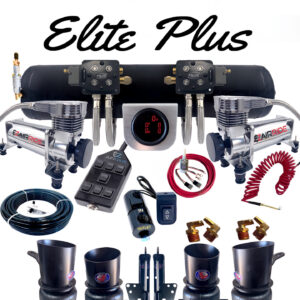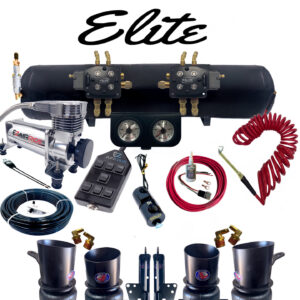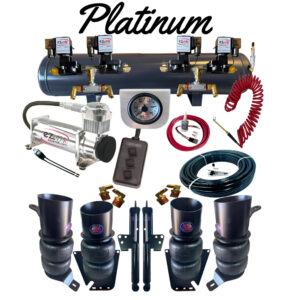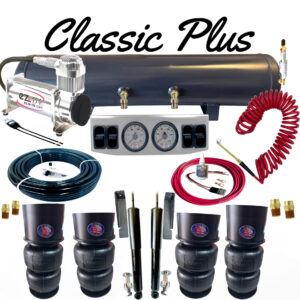
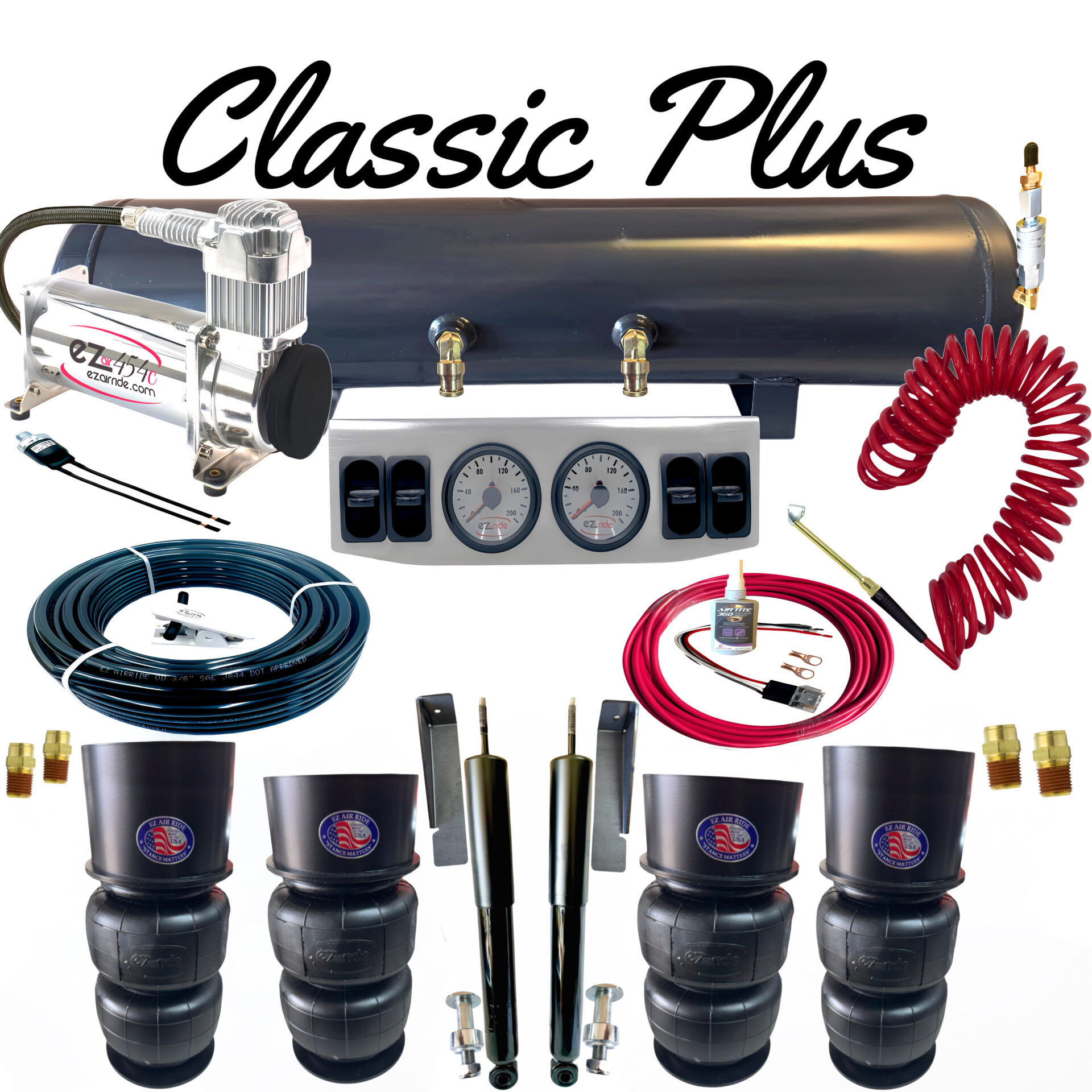
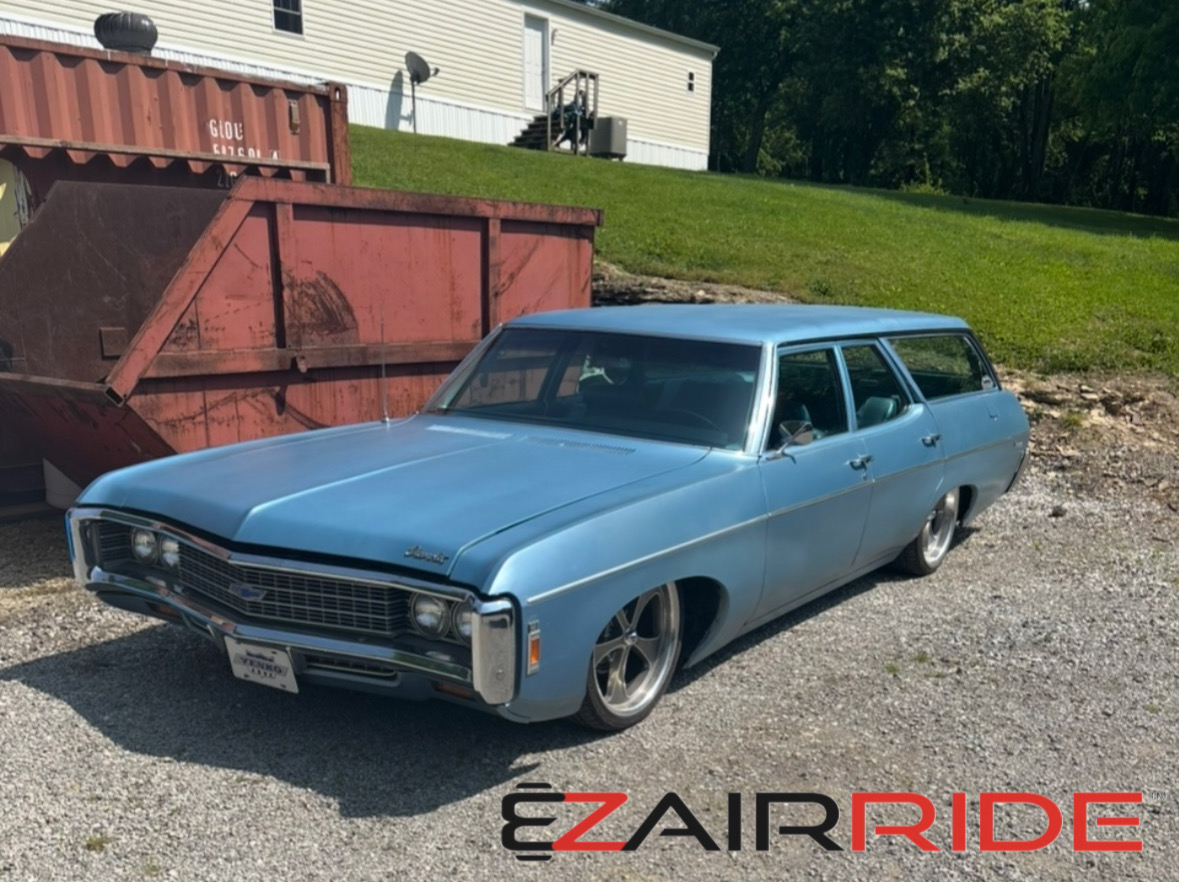
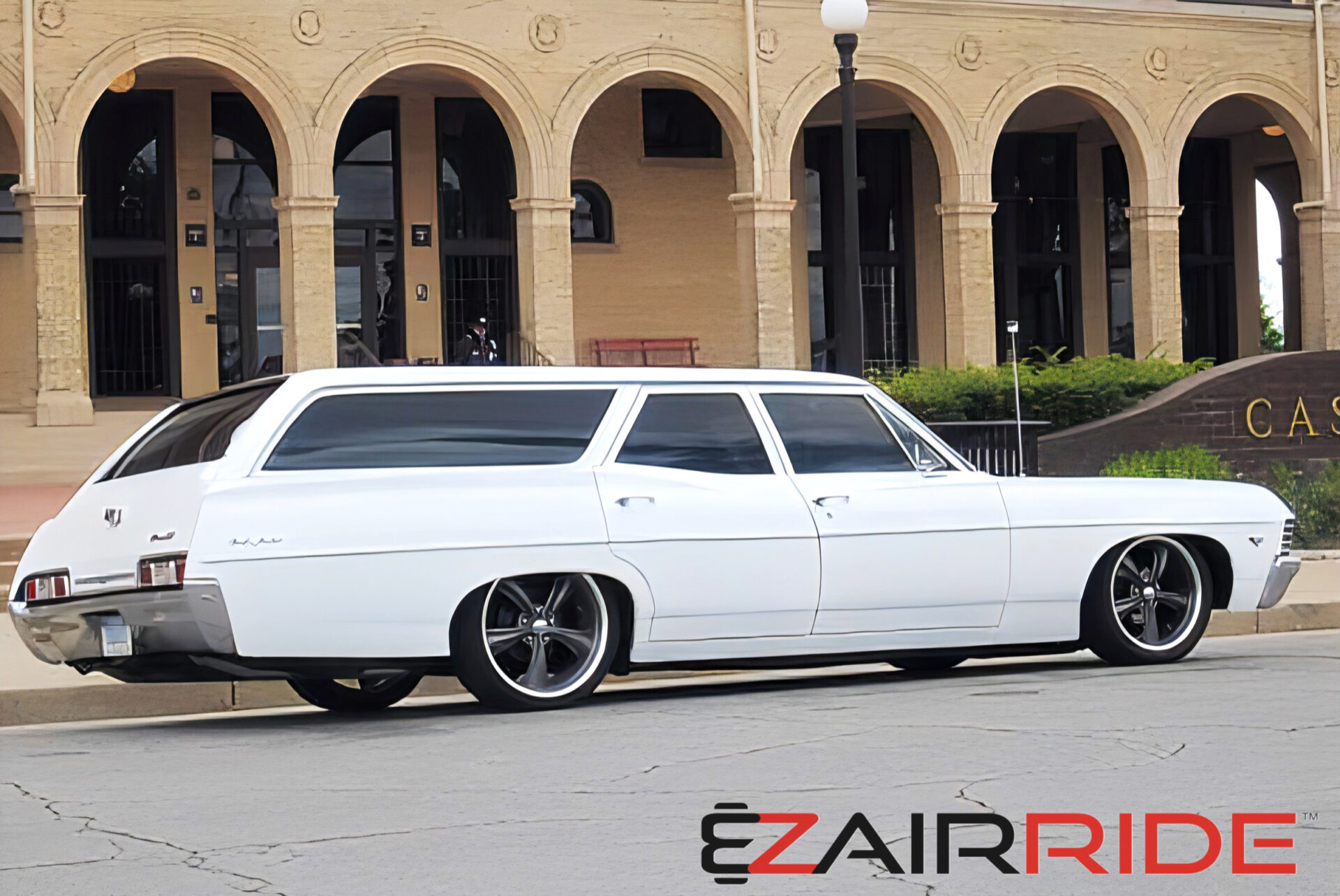

The Classic Plus Kit™ is designed to enhance your station wagon with improved stability, dynamic driving performance, and, of course, a unique stance. It allows for effortless manual suspension adjustments, complemented by our exclusive dual-needle air gauge panel and paddle valve switches for precise air pressure monitoring in the bags. Tailored for DIY enthusiasts, this kit eliminates the need for complicated components, such as self-leveling levelers, sensors, computers, complex wiring, and calibration. We refer to the straightforward control feature as “driver’s seat calibration,” which allows you to adjust your air ride suspension based solely on your visual assessment. With the touch of your finger, you can adjust the pressure using the switches, much like monitoring your speed with a speedometer and controlling it with your gas pedal. The Classic Plus gauge panel operates similarly: simply adjust the paddle switch lever with your finger to modify your vehicle’s height while observing the gauge needles to reach your desired pressure and ride height. Enjoy effortless adjustability with just a touch of your finger.
With our four-corner control air ride gauge panel, you can easily customize the ride height of your vehicle at the front, rear, and both sides, allowing for adjustments to individual corners. Whether you want to lower your car to lay it on the lawn at the car show, accommodate added passenger weight, or raise it for a more dynamic cruising experience, this system offers exceptional flexibility. This high level of adjustability sets our air ride suspension apart, providing a ride tailored to your unique preferences and needs.
The Classic Plus Kit™ is a four-corner control system, often referred to as FBSS (front, back, side, side). While it may seem like a flashy addition meant for show, it’s important to understand that this system goes far beyond merely impressing onlookers with stoplight shenanigans, bouncing side to side. It serves a more practical purpose: The precise four-corner control enhances stability at each corner of your classic vehicle while minimizing body roll. Whether you’re accelerating up a freeway on-ramp at 60 mph, navigating painful potholes on a country road, or accommodating extra passenger weight, refined corner control is crucial for achieving optimal performance and combating the dreaded “Chevy Leans,”
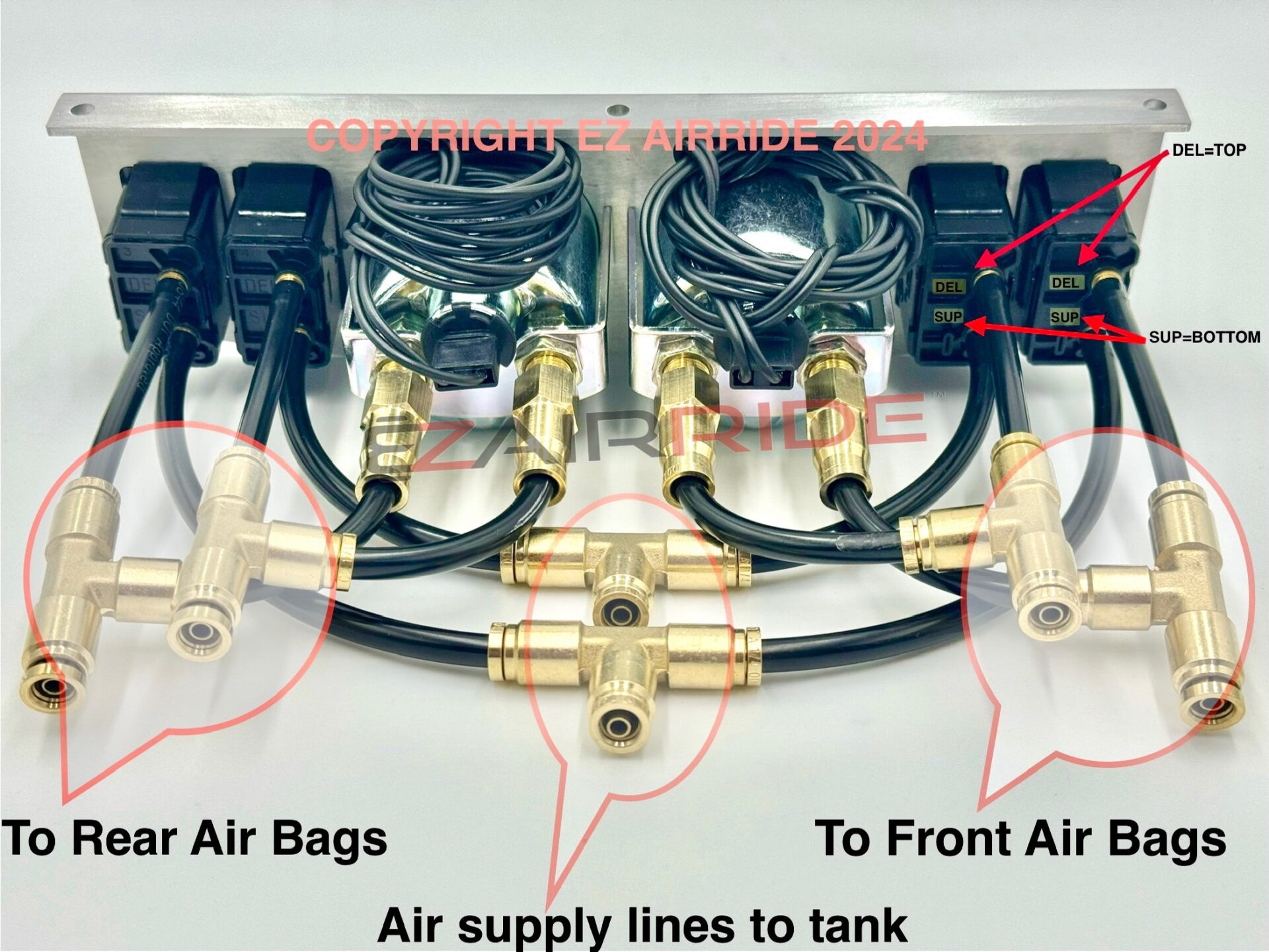
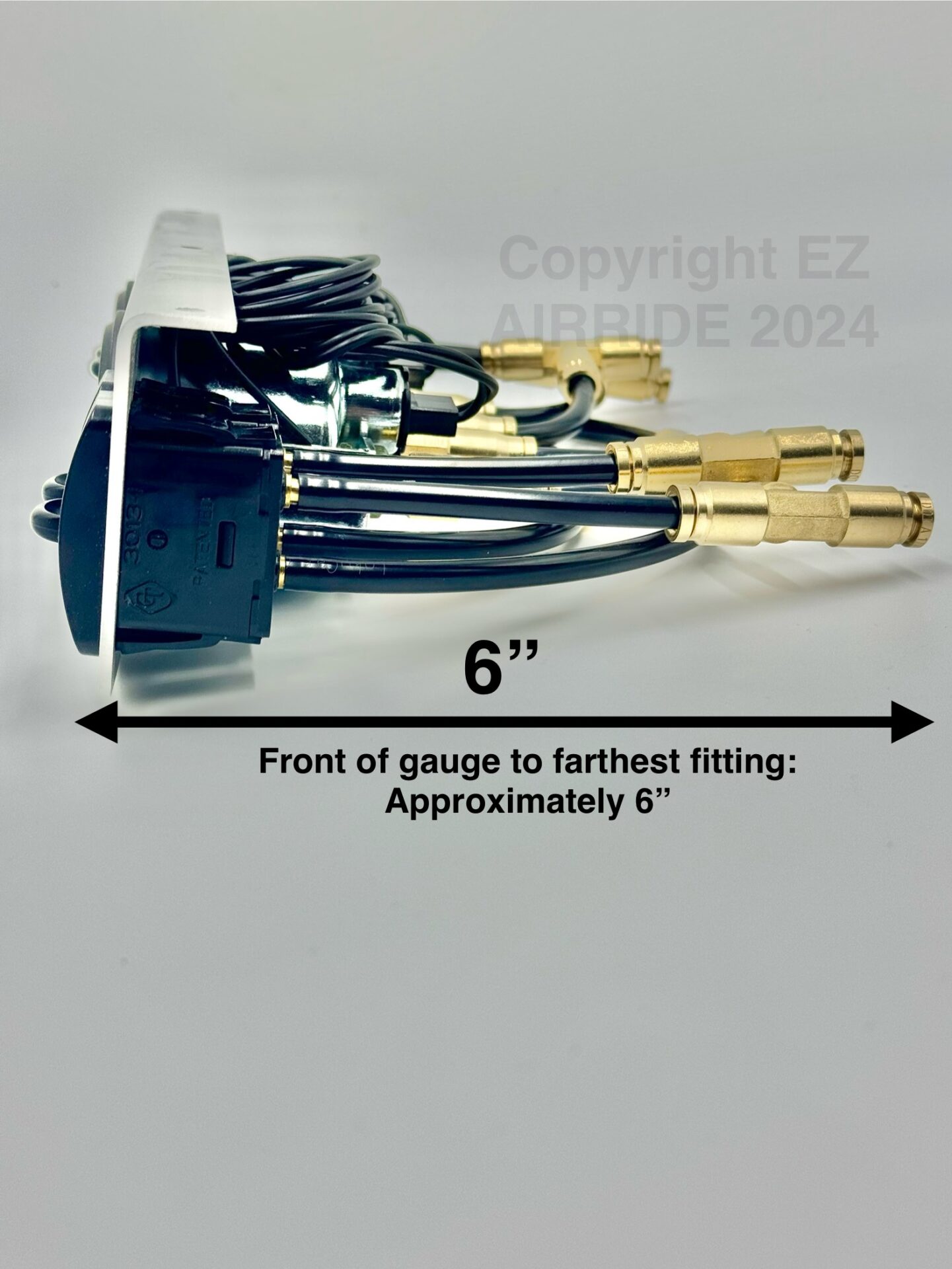
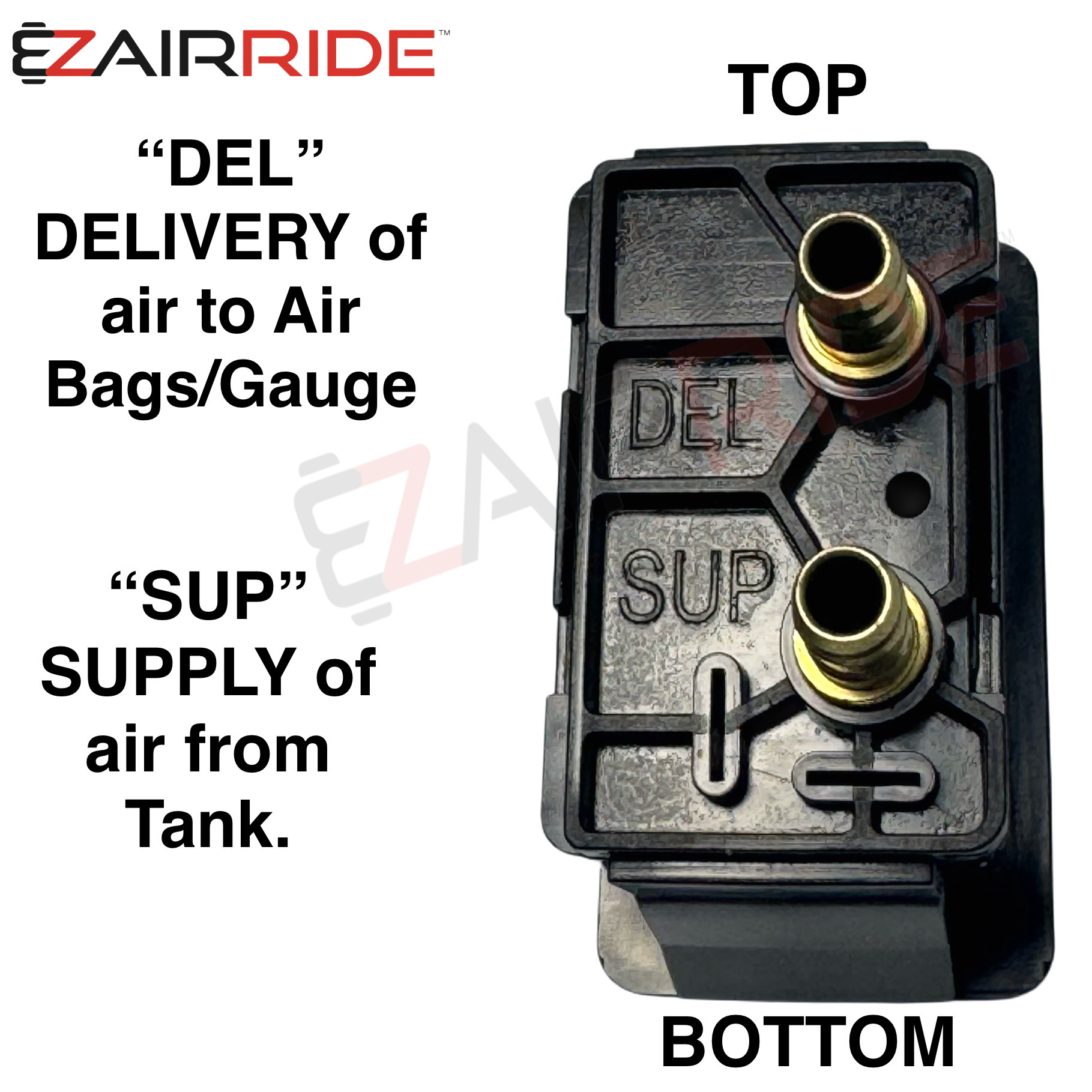
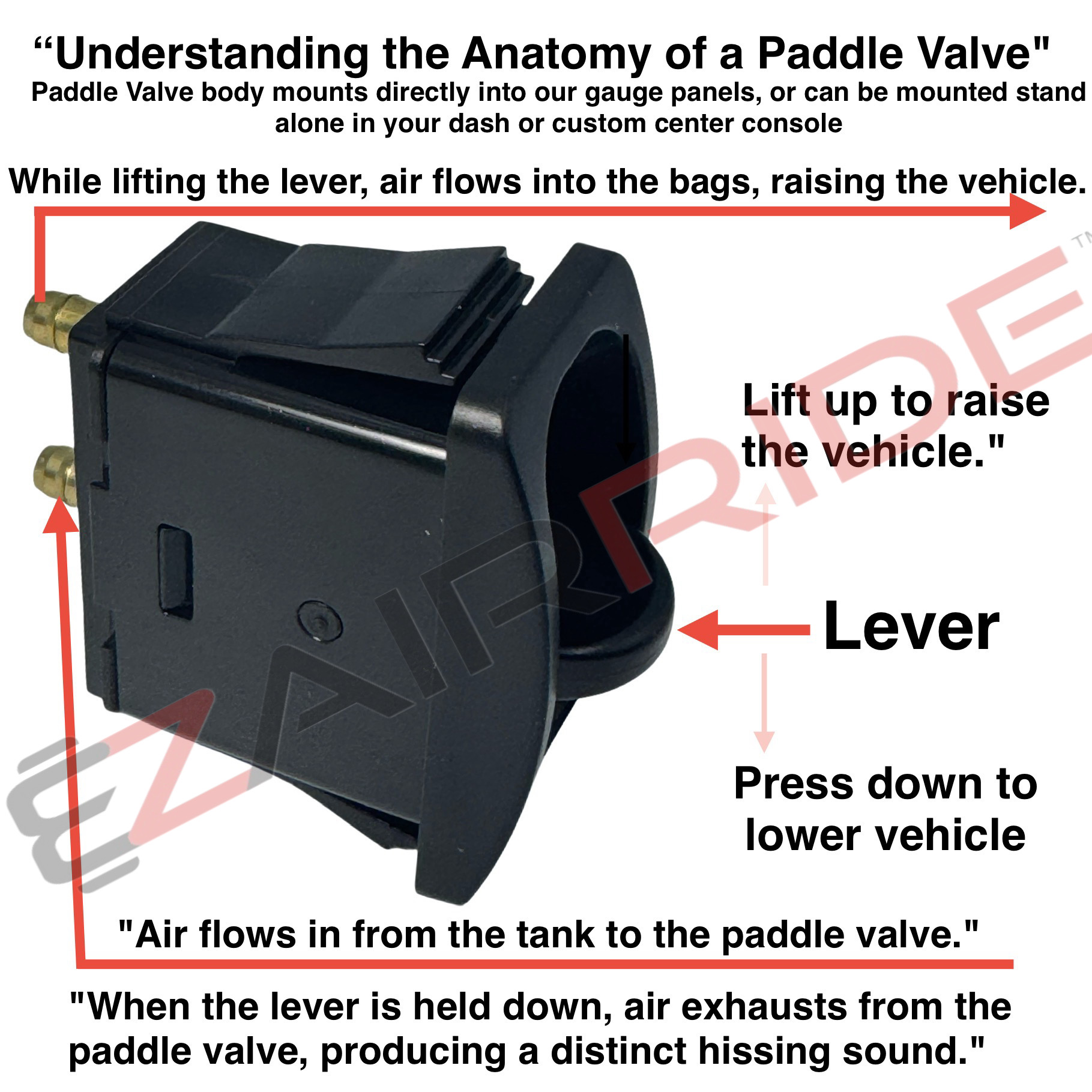
The Classic Plus Kit™ features user-friendly paddle switches that control airflow from the tank to the air bags and release air from the bags back through the exhaust port on the paddle switches, allowing for manual adjustments tailored to your specific cruising conditions. While there are numerous fittings to plumb behind the gauge for efficient connections, our Premium Elite Kits elevate convenience by bypassing all the plumbing and fittings at the gauge. With the Elite Kit, you avoid routing the airbag lines to the dash, eliminating the need for multiple connections behind the gauge.
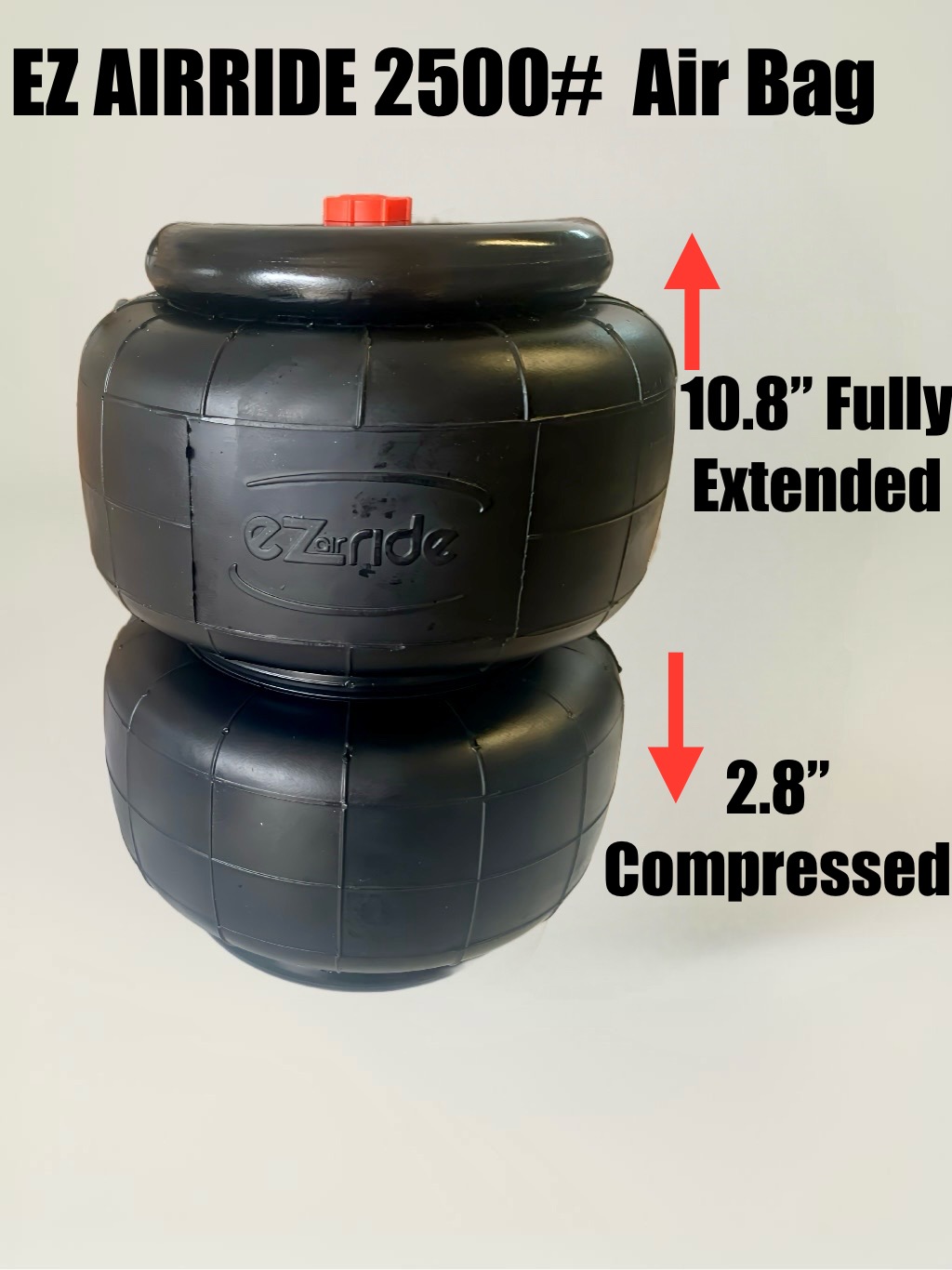
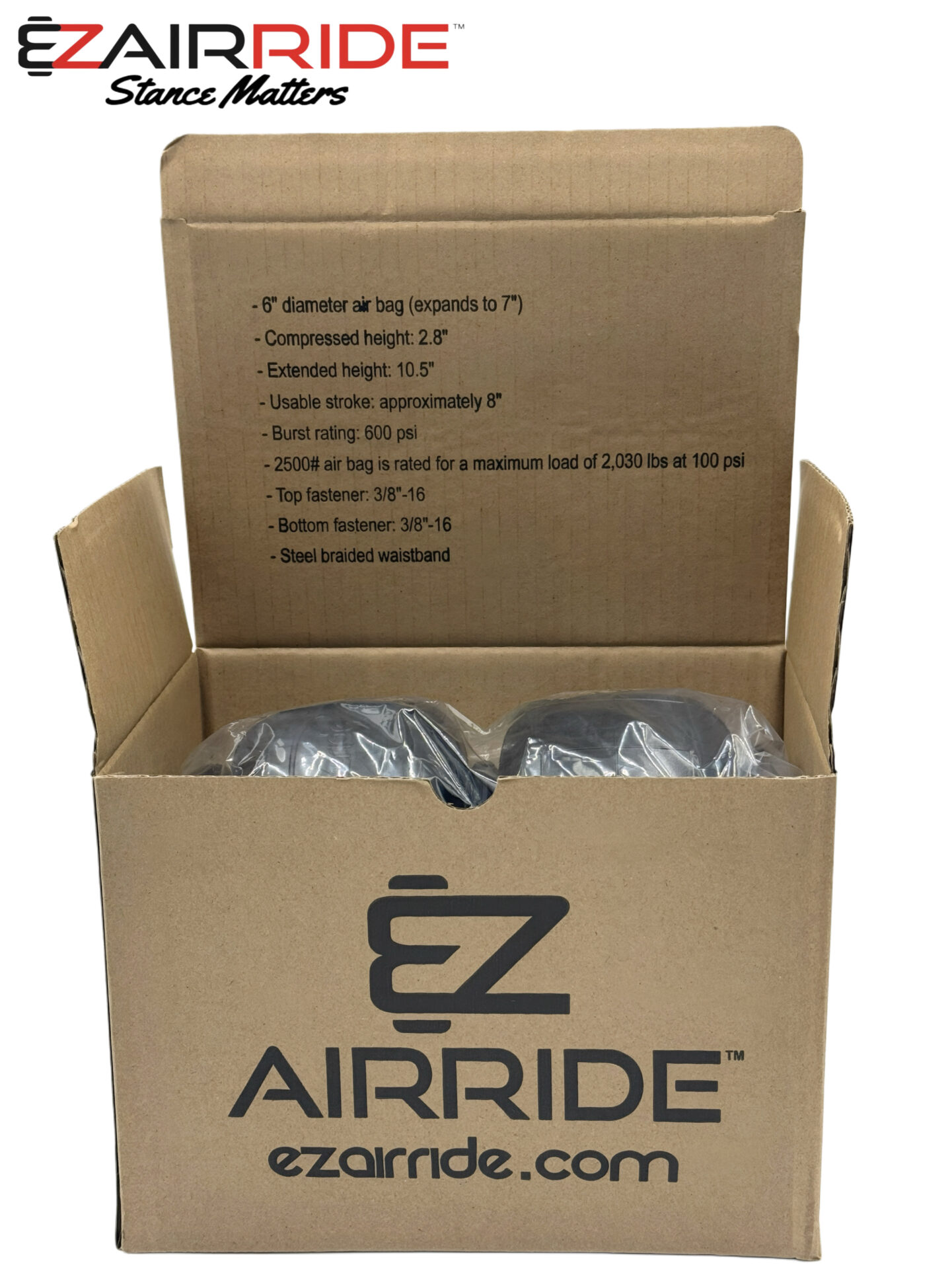
WHATS INCLUDED: Introducing our exclusive EZ AIRRIDE™ airbags & brackets, specially designed for all 1965-1970 Impala’s, Bel Airs, Biscayne’s, Caprice Classics and full size station wagons. Our 2500 series airbags offer more stroke than traditional 2500 series airbags, compressing down to 2.8 inches and extending to 10.5 inches, providing useable stroke of nearly 8 inches. This increased stroke results in lower pressure within the bags, ultimately delivering a more dynamic ride quality. Whether you’re planning an LS swap, have a 454 big block engine, or want to fit 20″ rims on your ride, our airbags can handle it all. Each 2500 series airbag has a max load rating of 2,096 lbs. @ 100 psi. Whether you’re laying it on the lawn at a car show, preventing your pipes or oil pan from scraping along the driveway, or scrubbing the tires on turns due to extra passenger weight, the Classic Plus Kit ensures optimal clearance and performance.
EASE OF INSTALLATION OF THE BAGS & BRACKETS: Simplify your air ride installation with our exclusive bag brackets—the easiest setup you’ll find for airbag systems. Our brackets feature a durable powder-coated finish that enhances longevity by offering added protection. All necessary airbag and bracket hardware is included, such as nuts, bolts, washers, and the required 7/16-inch all-thread. There’s no need to break out heavy-duty tools or welding equipment; just grab your socket set, drill, and a small angle grinder, and you’ll be good to go!
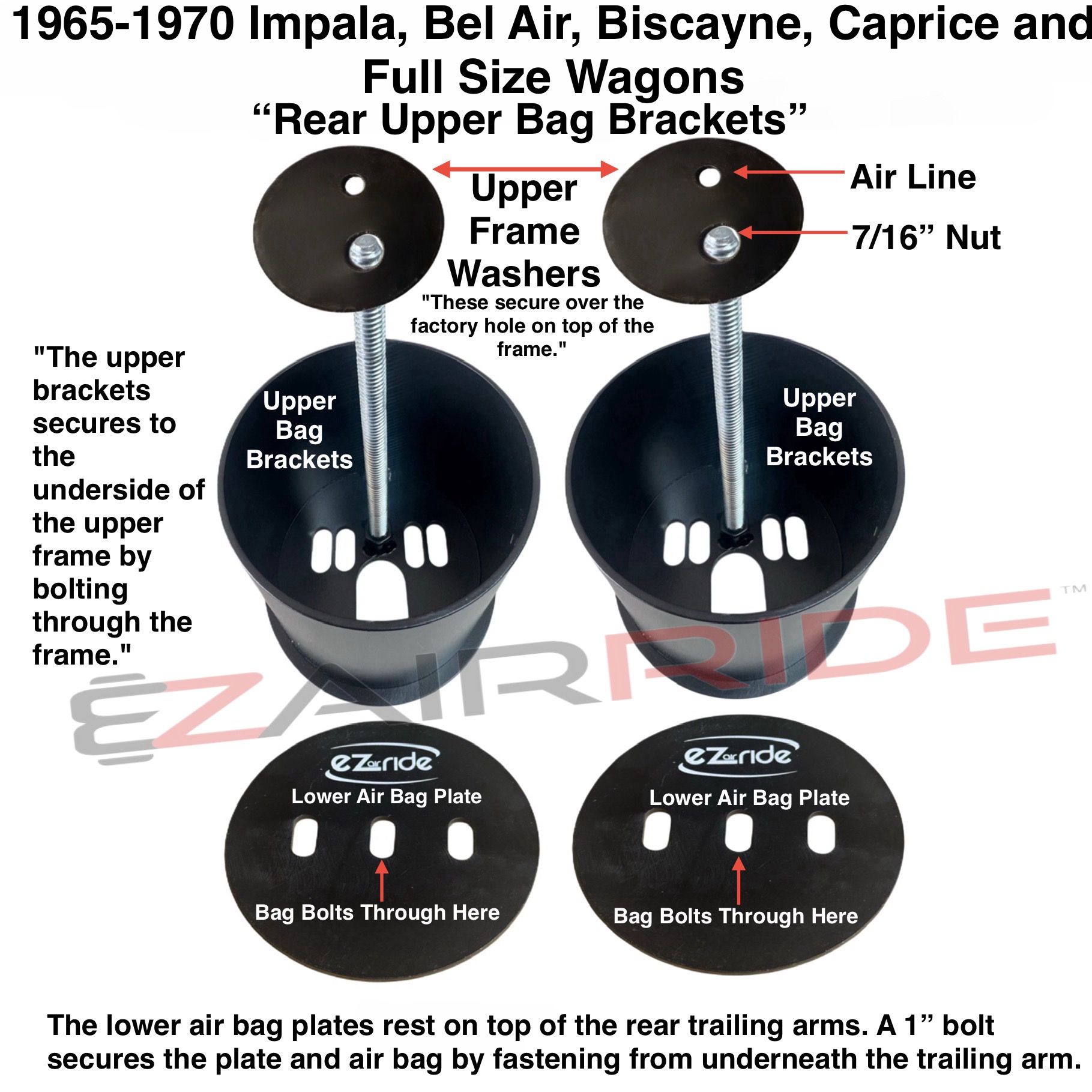
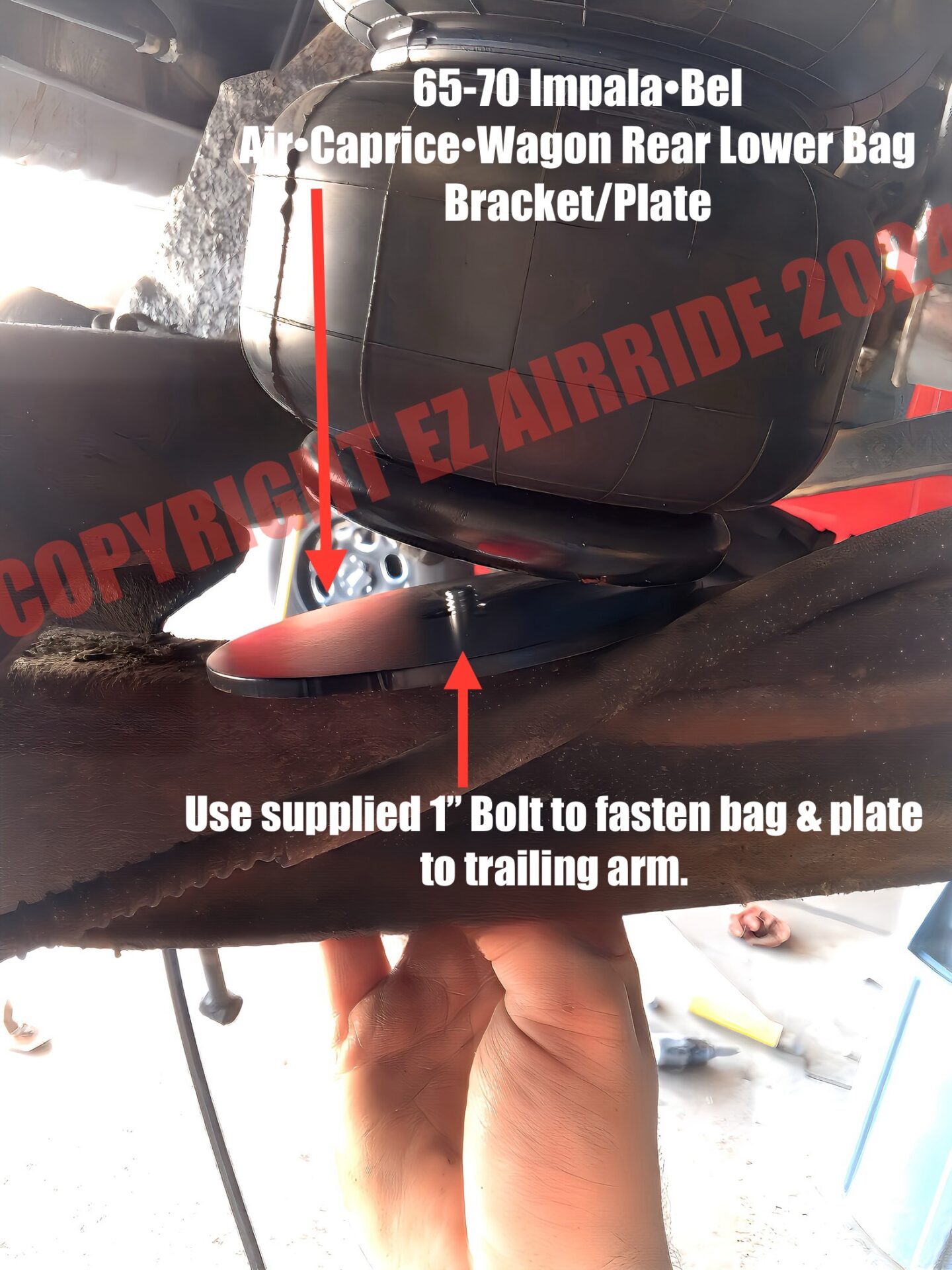
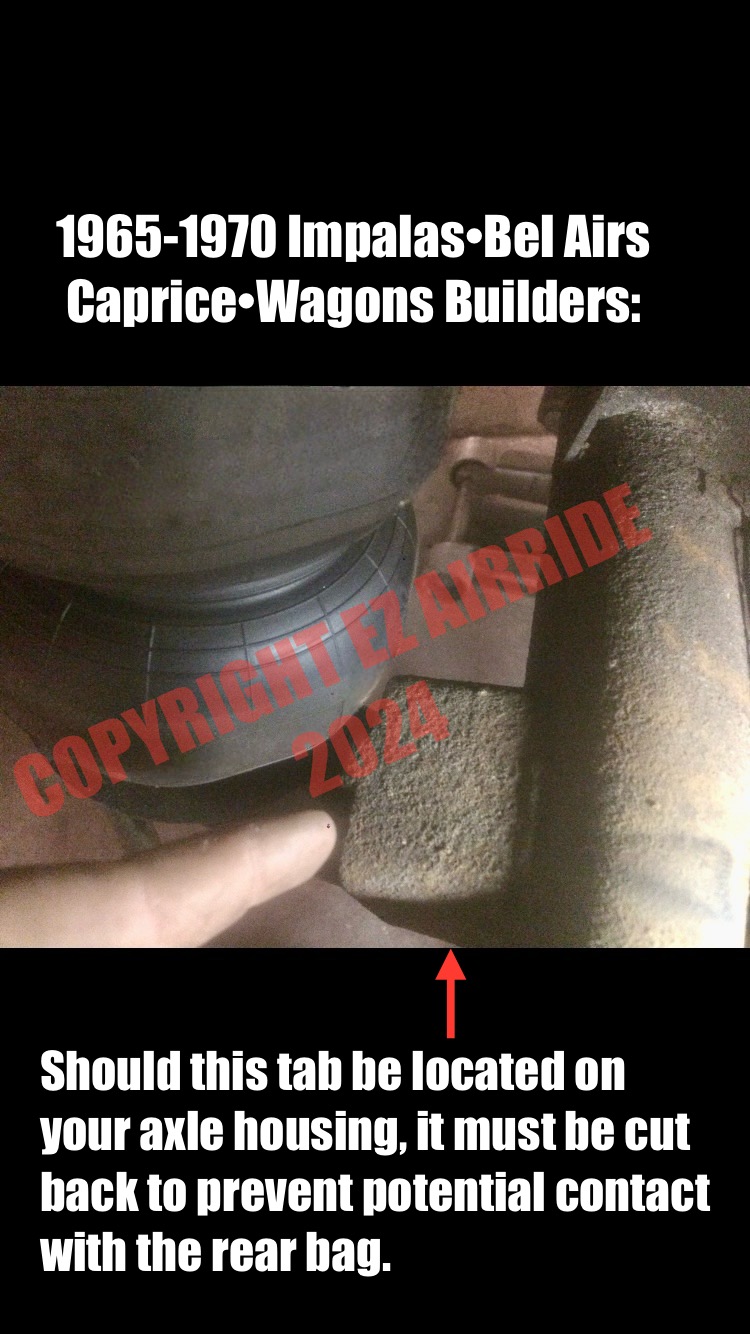
STARTING WITH THE REAR: Begin the rear installation by positioning the lower bag plate onto the trailing arm along with the air spring. Secure both components in place by threading the supplied 1-inch bolt from the underside of the trailing arm, capturing the lower plate and fastening it to the air spring.
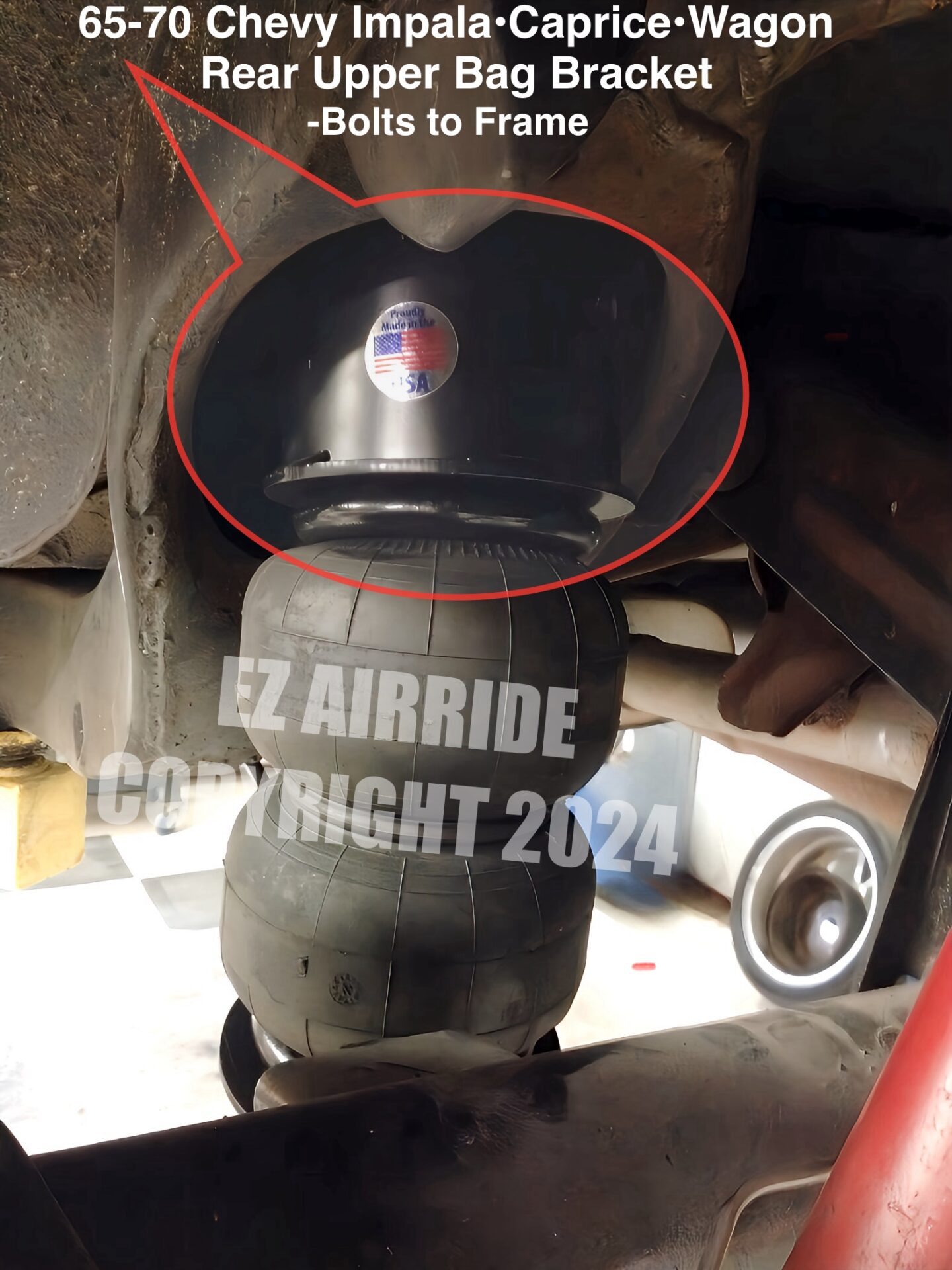
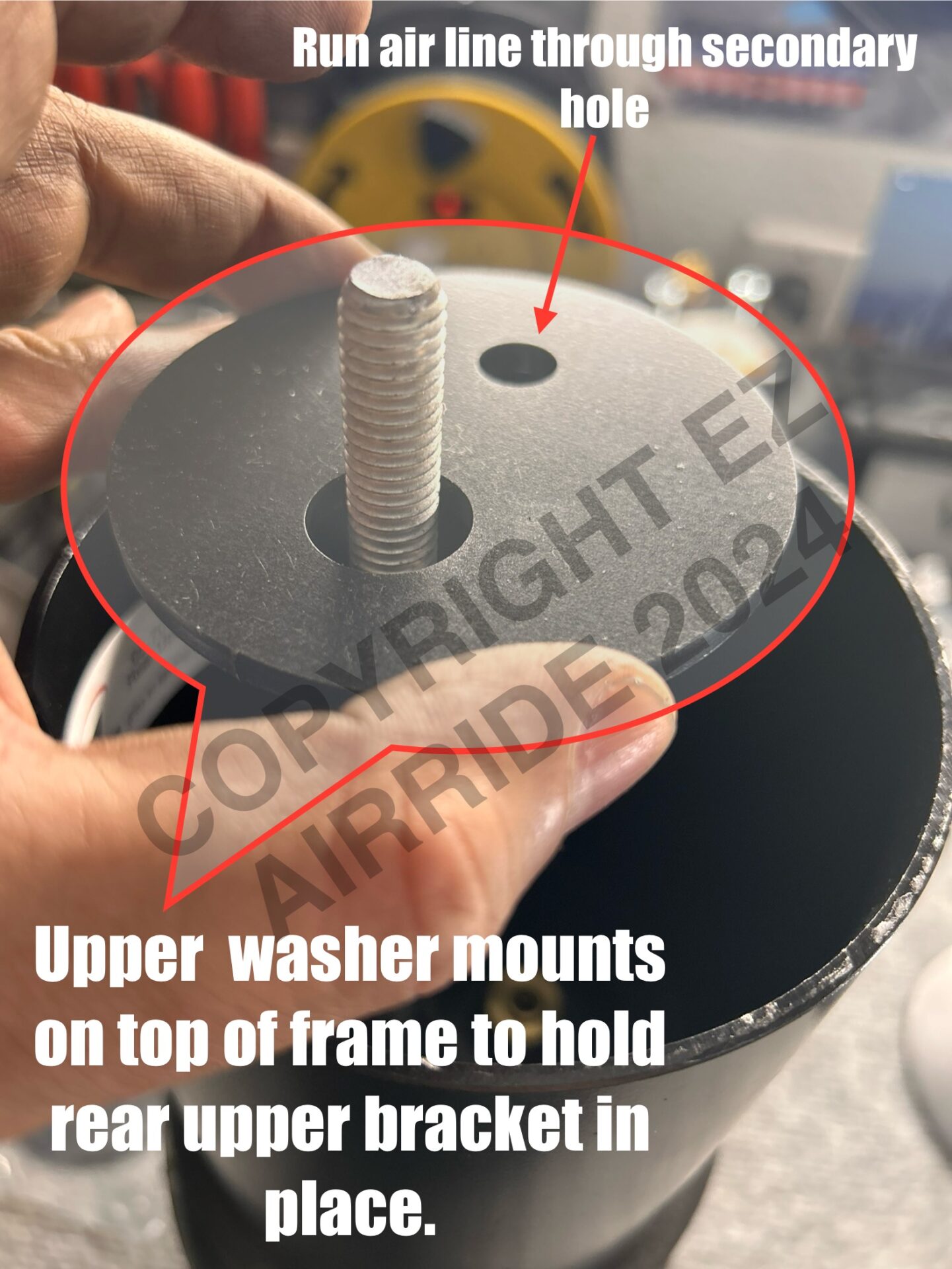
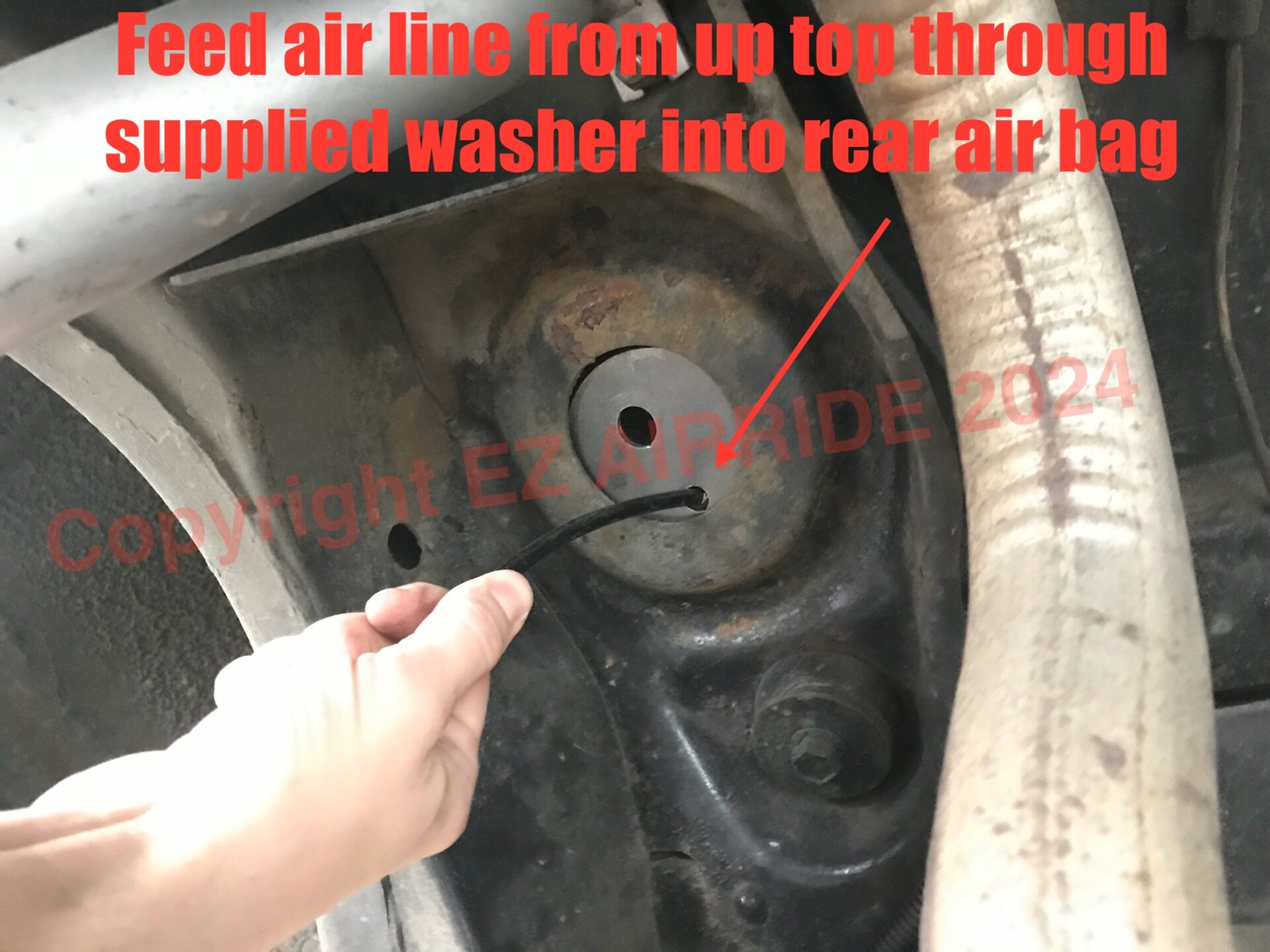
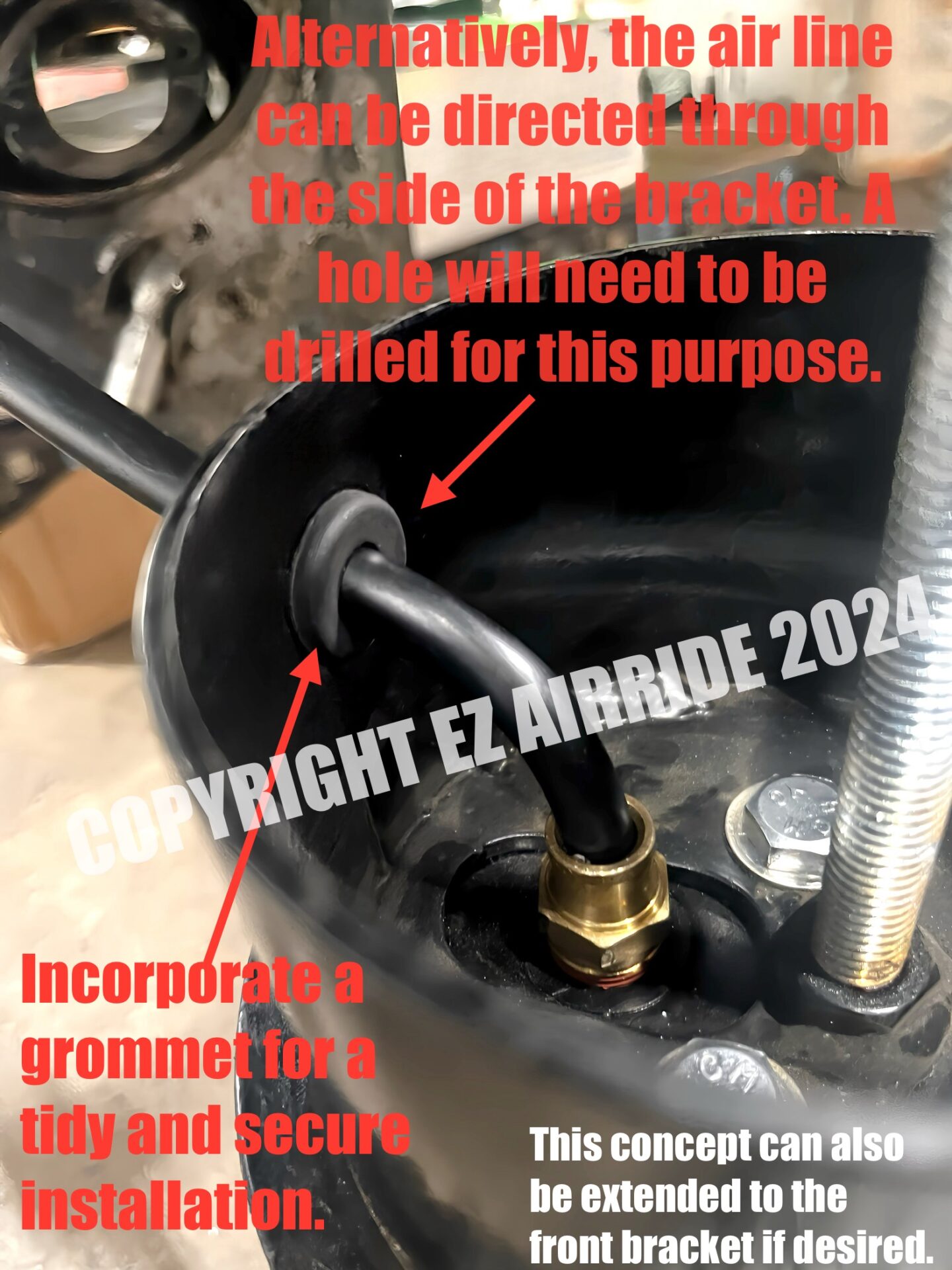
Installing the upper bracket is equally straightforward. Begin by attaching it to the underside of the frame. Insert the supplied 7/16-inch all-thread from the inside of the bracket up through the factory hole on top of the frame, which is approximately the size of a silver dollar. To secure the bracket, place the supplied washer over the silver dollar-sized hole on the frame to capture the all-thread. No drilling is necessary. The airline will then run through that same washer.
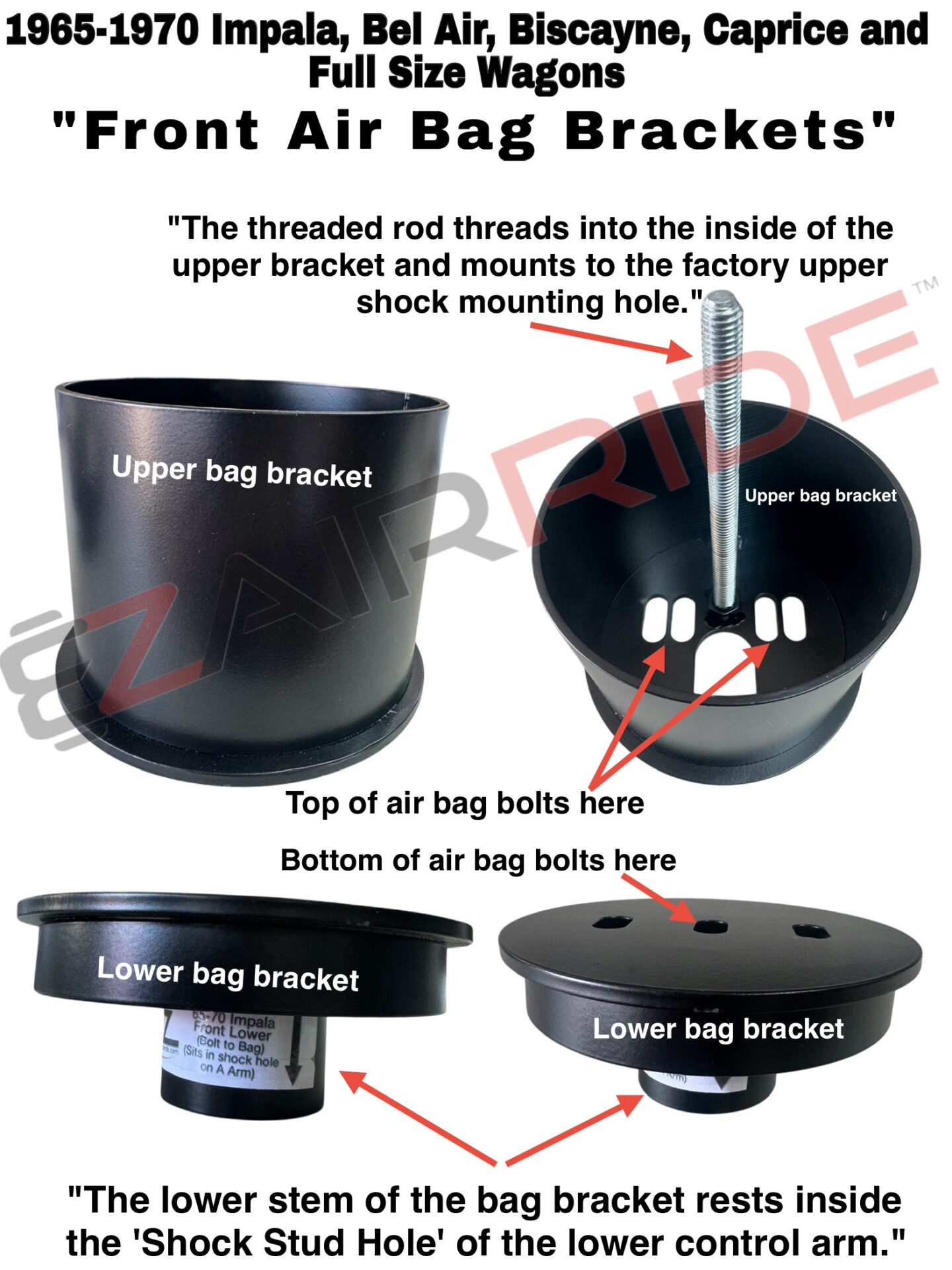
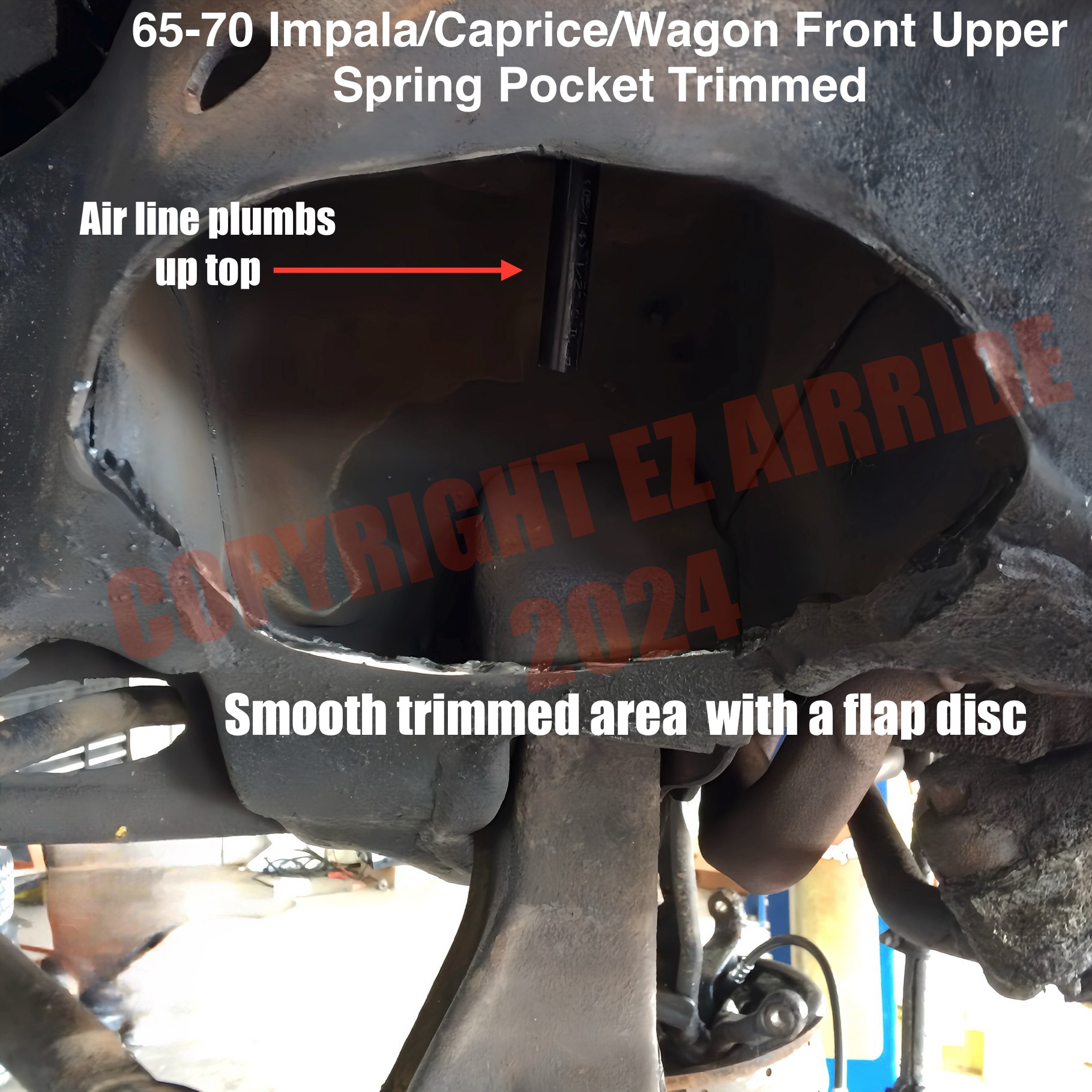
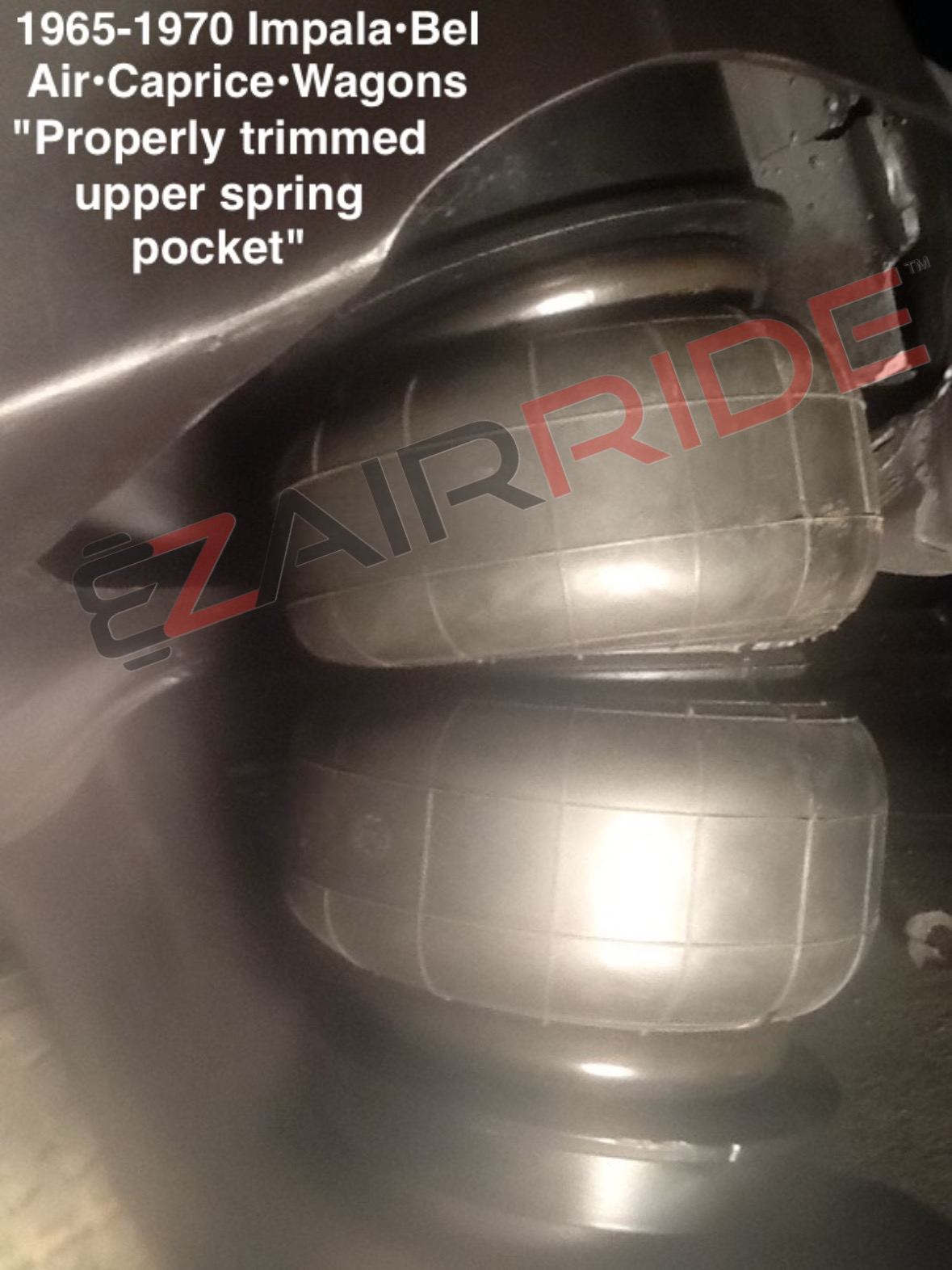
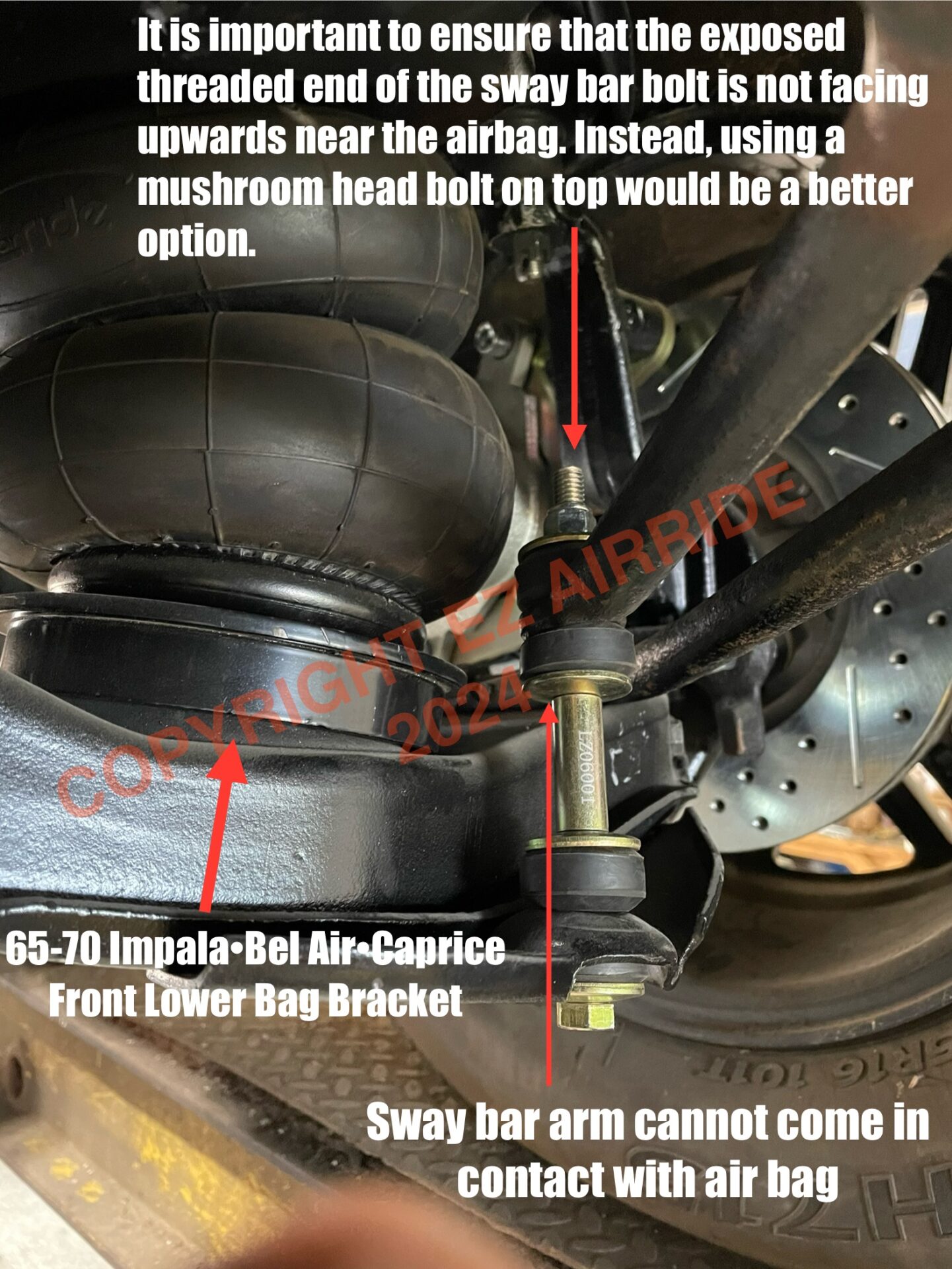
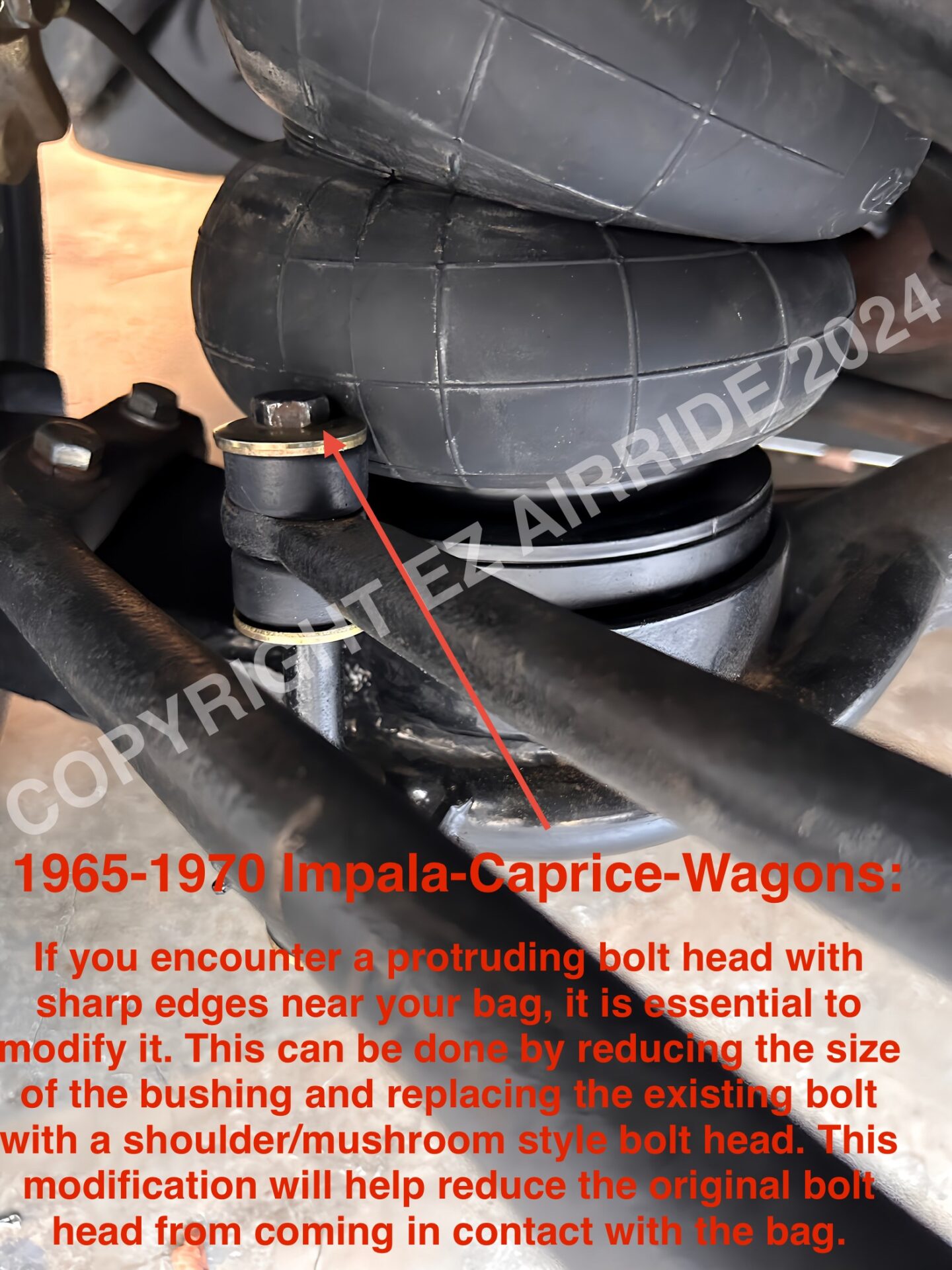
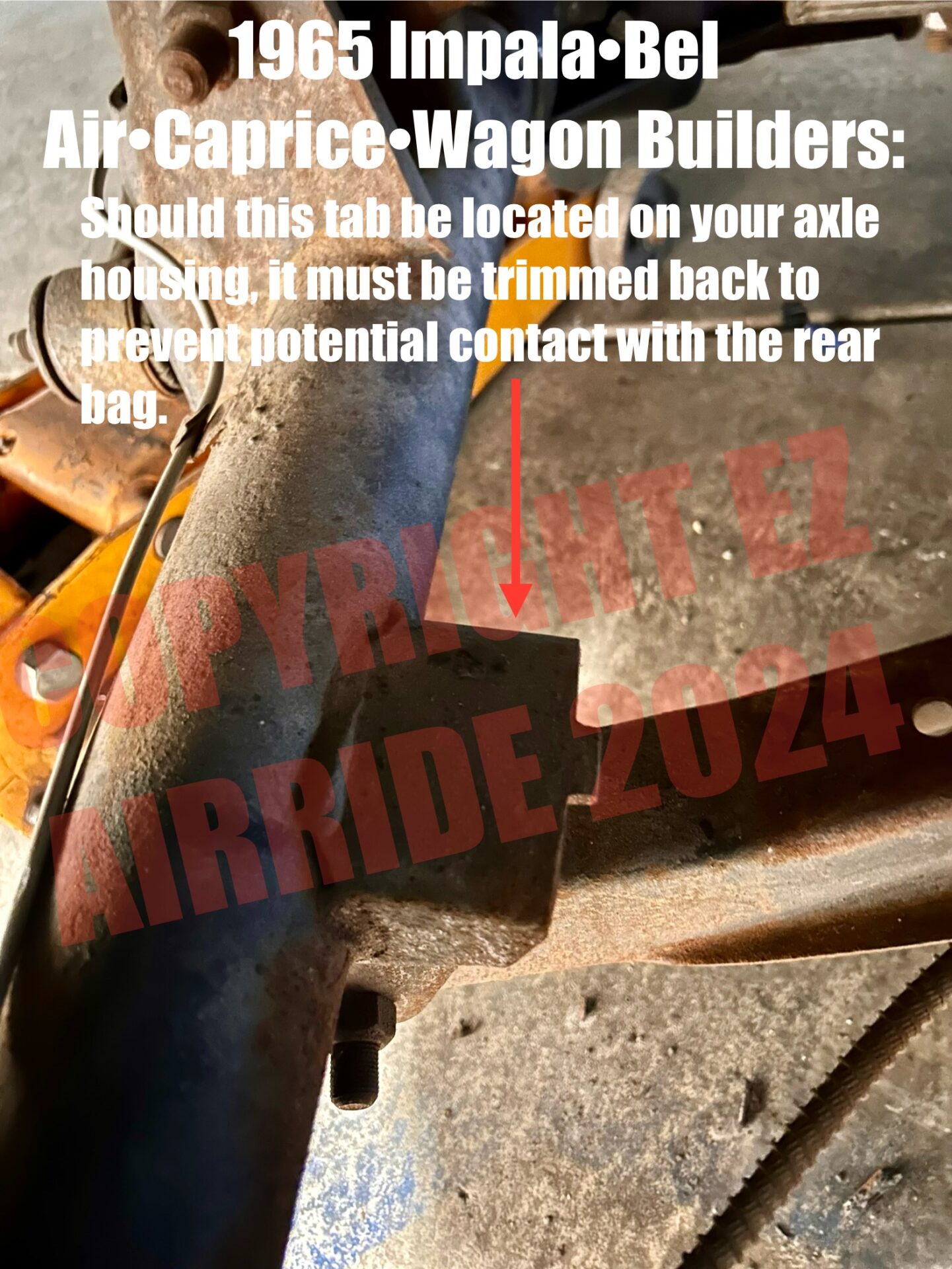
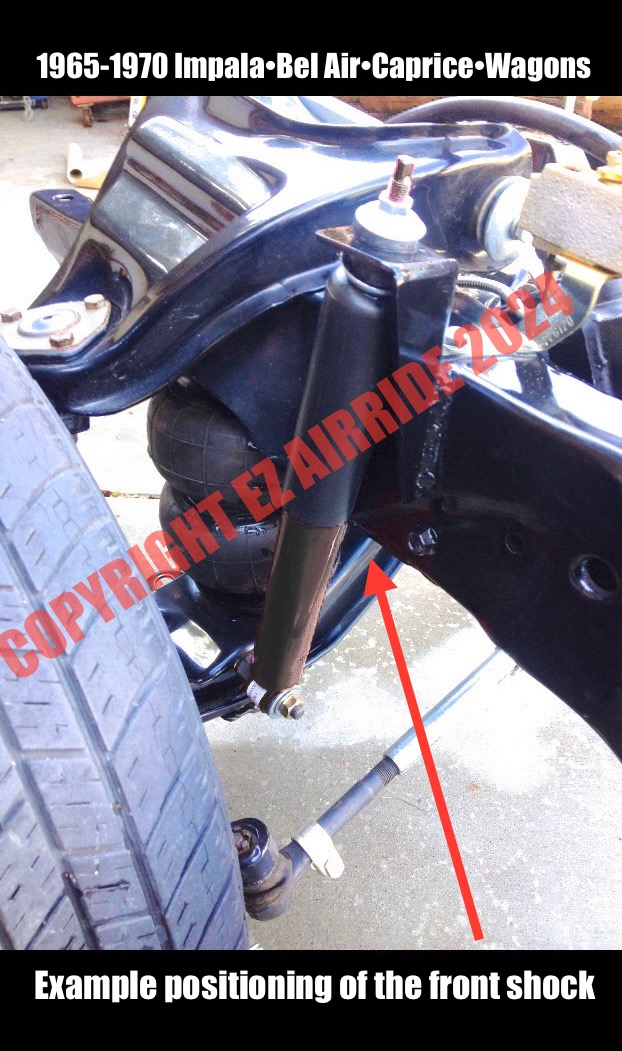
FRONT BRACKETS: The front lower bag bracket stem effortlessly drops into the shock hole, allowing the bag bracket to rest on the factory lower control arm. Bolt the bottom of the airbag through the same stem hole, ensuring it is securely fastened. Then, proceed to mount the upper bag bracket into the upper frame pocket and bolt it to the existing shock mount hole. You will need to trim out the upper outer frame pocket for optimal bag clearance on this particular model.
We offer our exclusive Triple Bellow air springs, which have a diameter of only 5 inches and expand to 5.51 inches. While you will lose approximately 2 inches of stroke compared to our traditional stock 2500 series air springs, trimming the frame should not be necessary. If you’d like to upgrade to the front air springs, please contact us. If you’re already running with aftermarket tubular control arms, just give us a heads up, and we will provide custom drop-in style brackets to fit seamlessly at no extra charge.
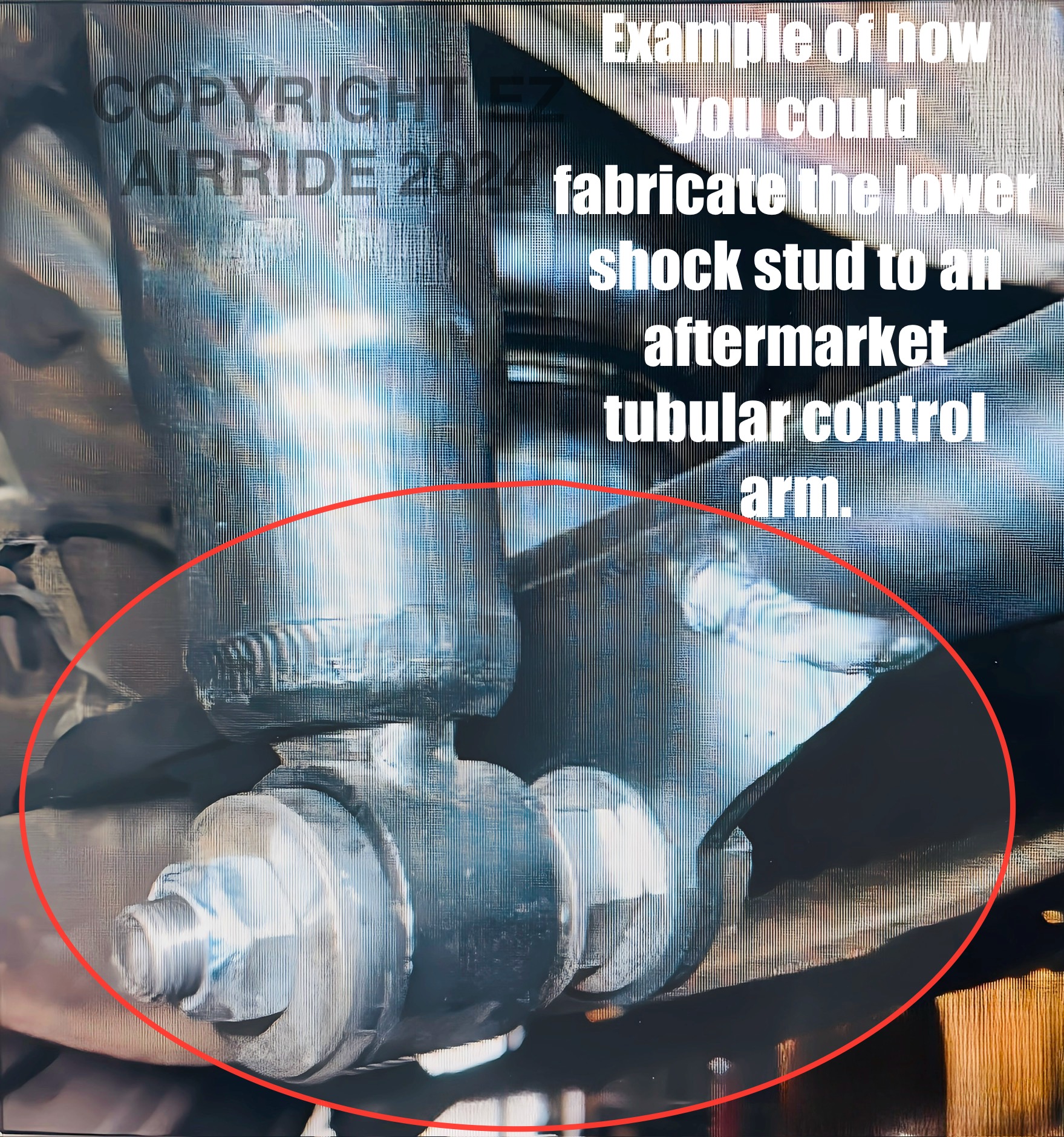
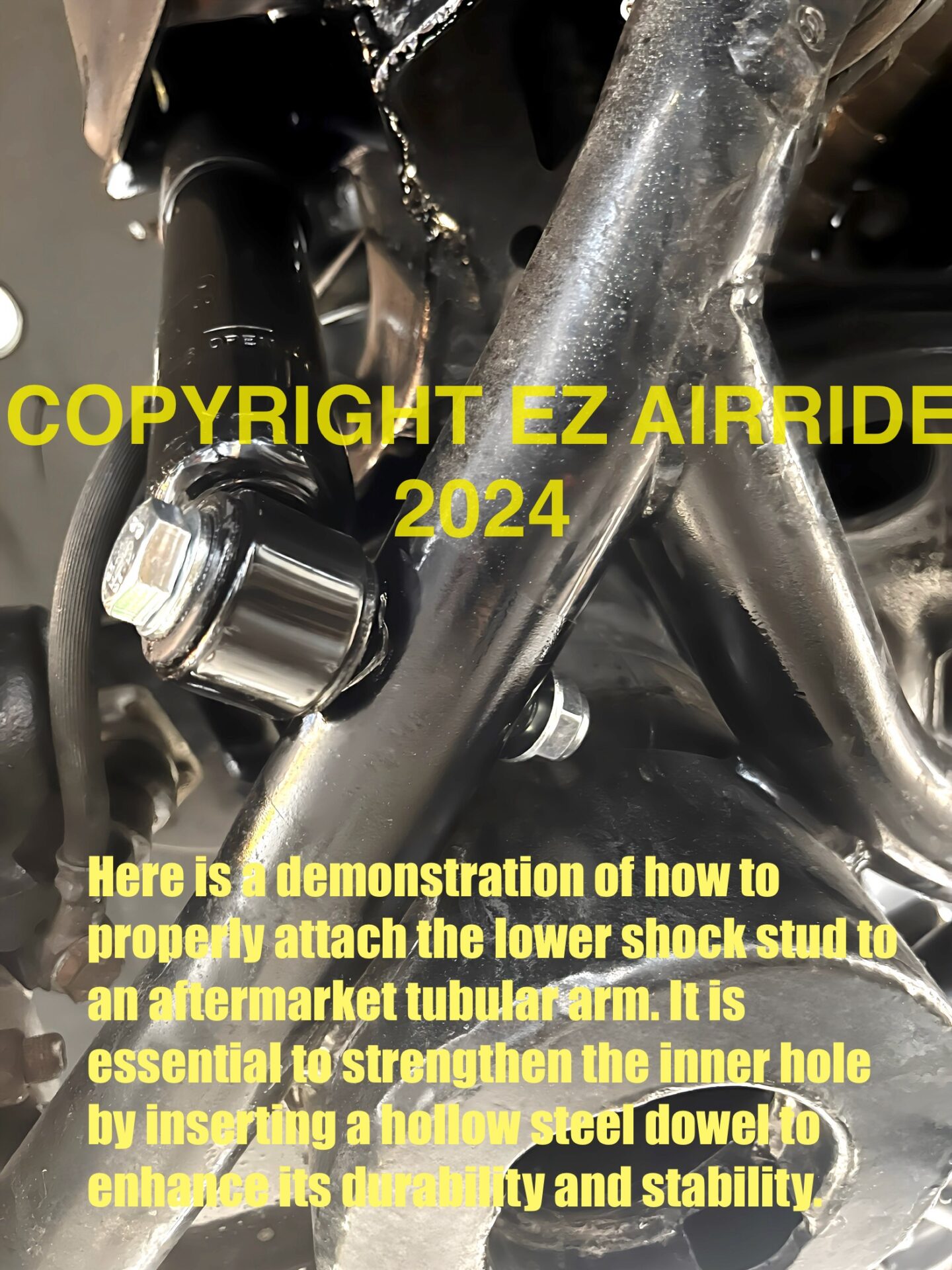
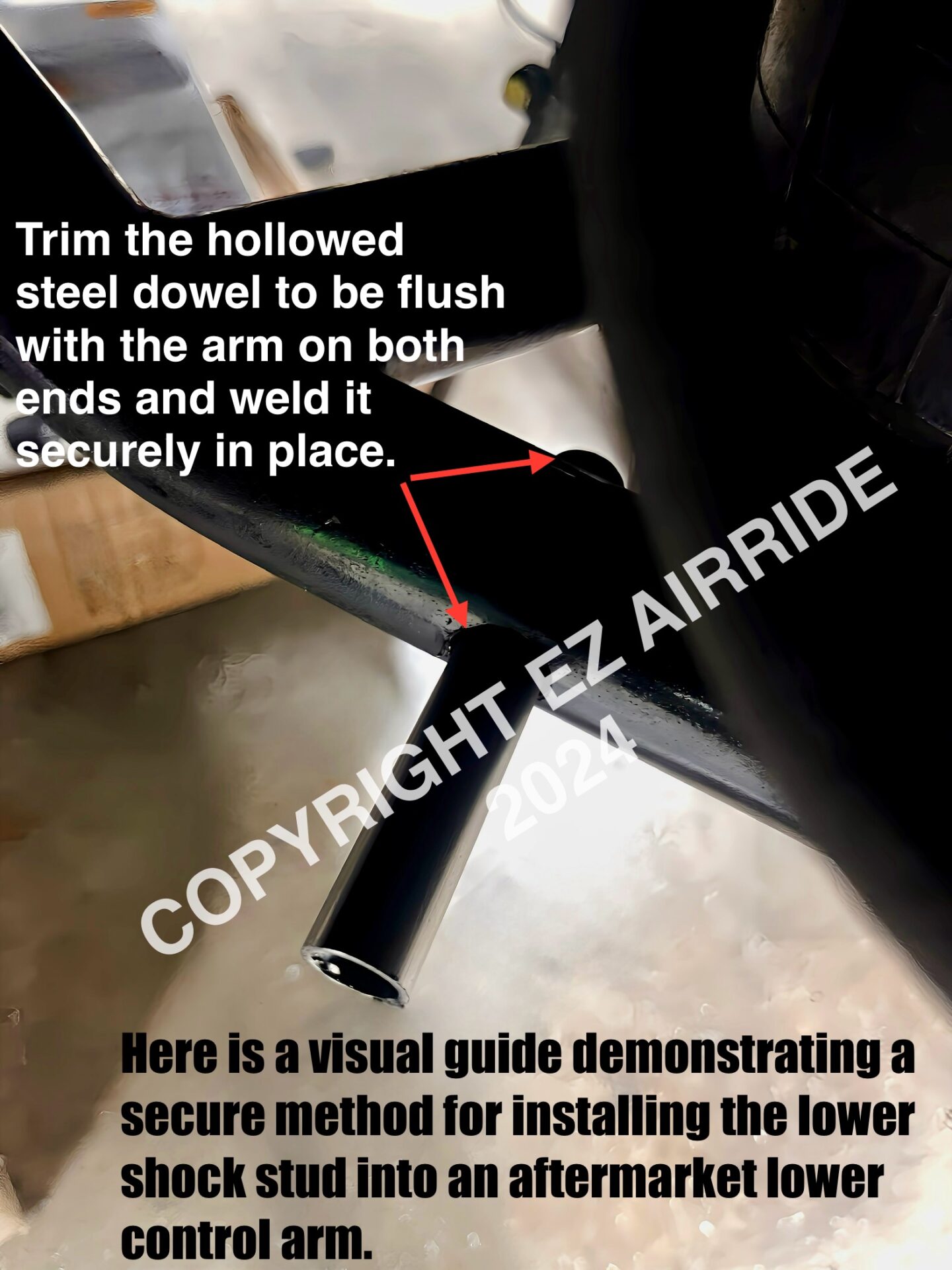
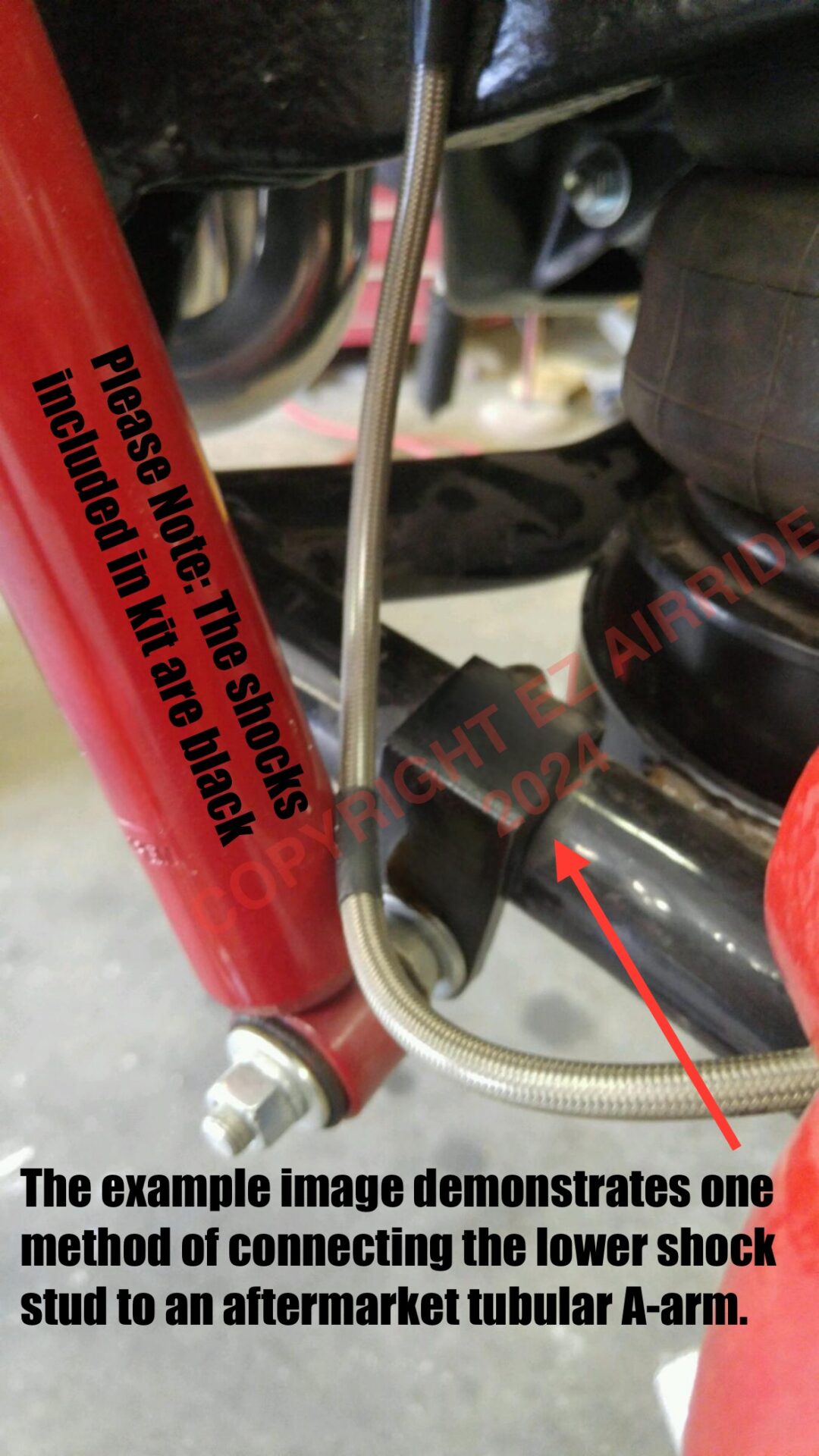
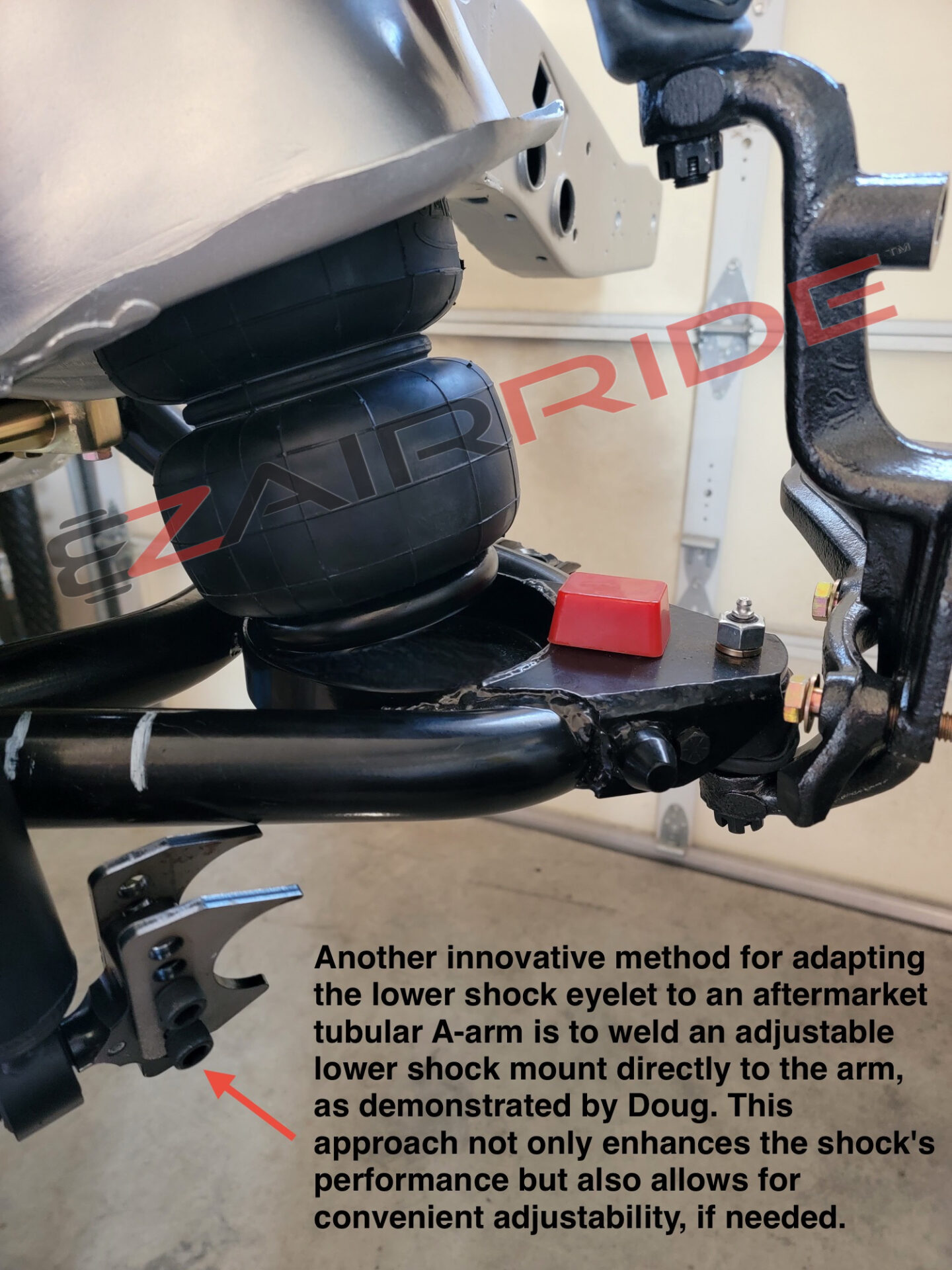
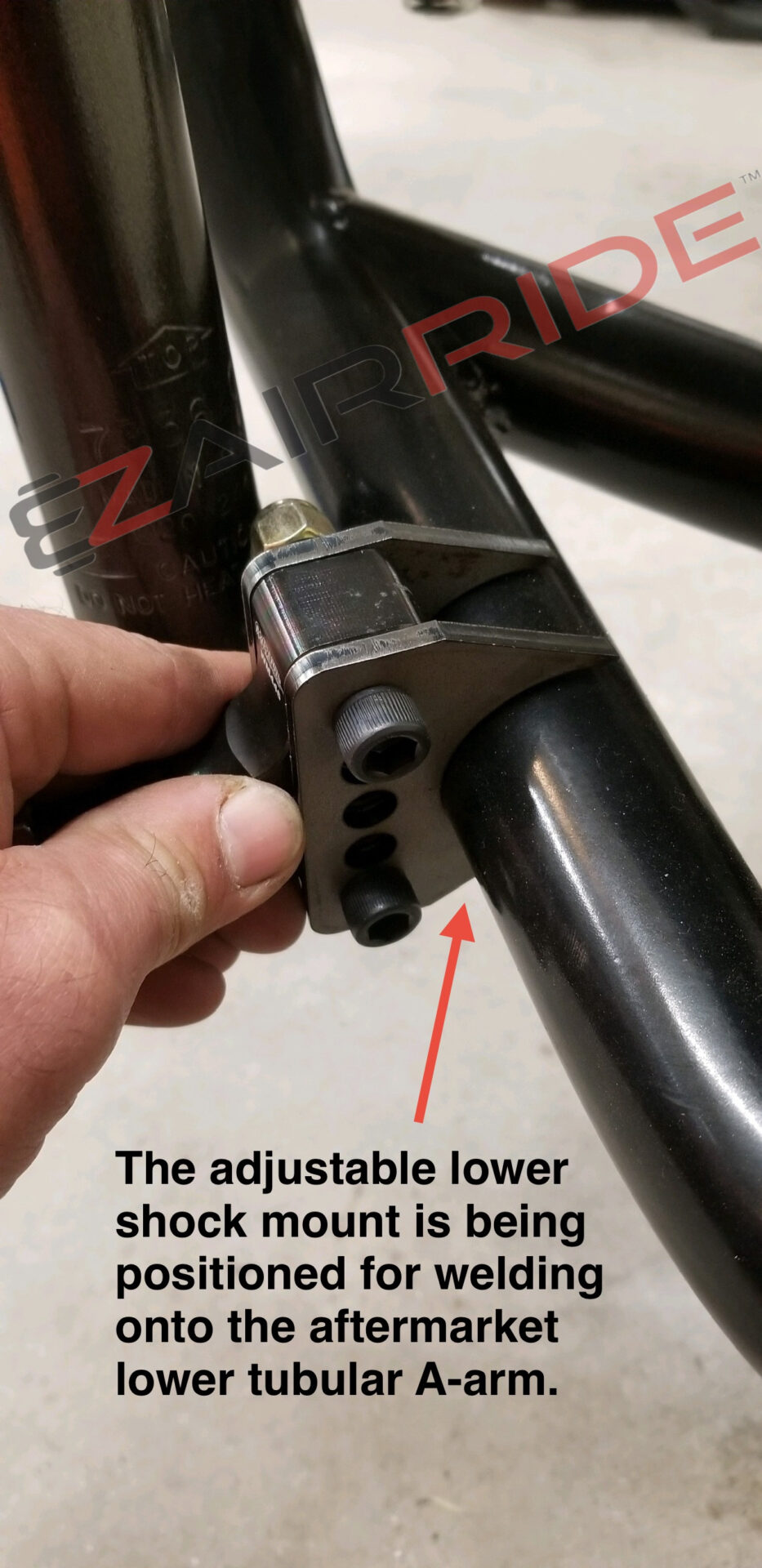
AFTERMARKET TUBULAR CONTROL ARMS: If your vehicle has aftermarket lower arms, or you’re planning to use aftermarket tubular lower arms, some light fabrication will be necessary to secure the lower shock stud to the arm. This process would involve drilling a hole through the aftermarket tubular arm and inserting a DOM tube of the correct size to support the lower stud, which will then need to be welded in place. Alternatively, you may explore fabricating tabs on the underside of the tubular arms to secure the stud. If you haven’t already purchased those fancy tubular arms, we recommend refurbishing your original arms by painting them and possibly equipping them with new ball joints. This approach simplifies the process of having to grind off the new powder coat and welding onto those new lower tubular arms, potentially saving you a few hundred dollars. However, if your primary goal is to showcase your vehicle’s new front lower tubular arms at a car show, they will certainly look impressive to the onlookers who admire them while lying underneath your vehicle.
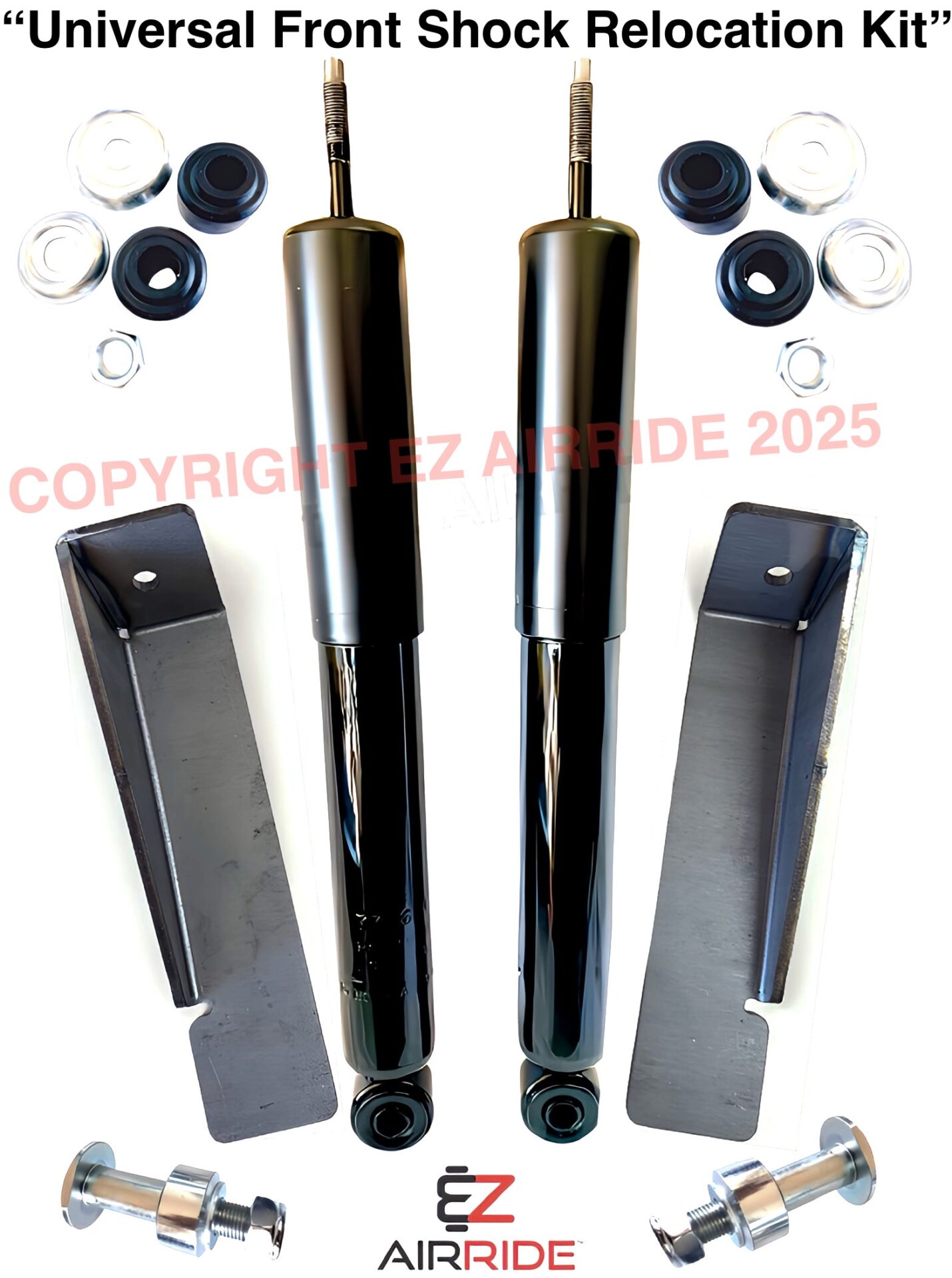
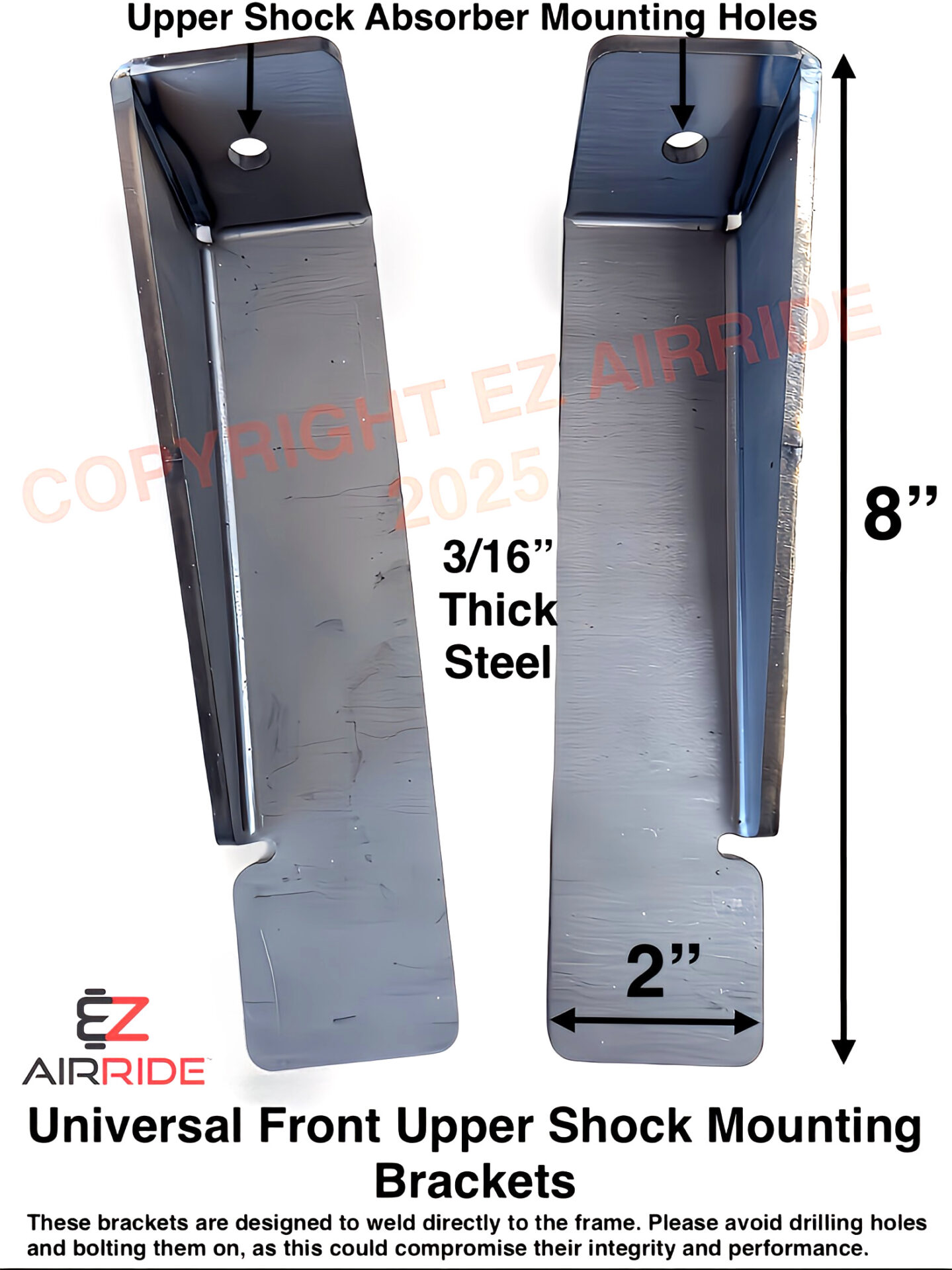
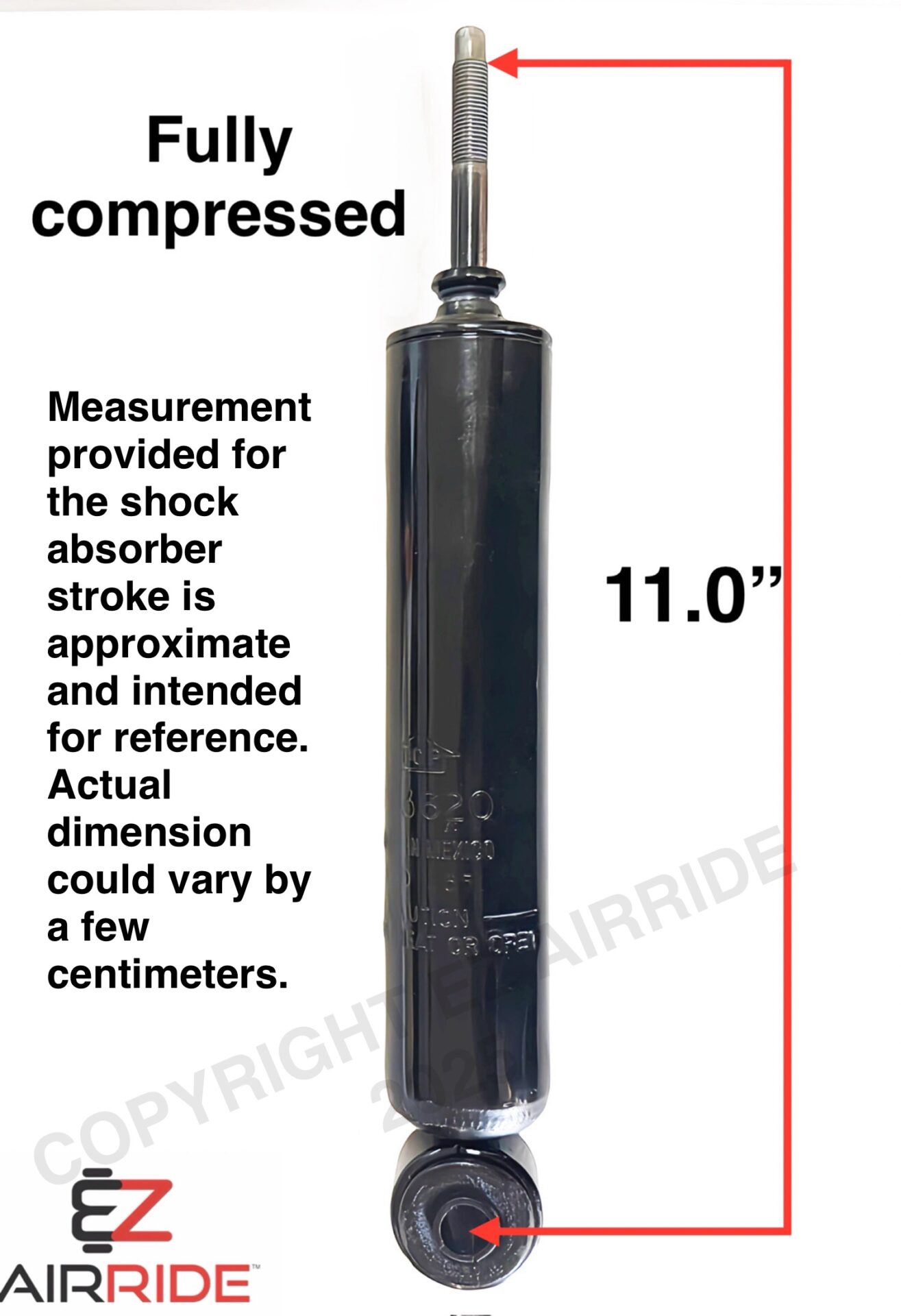
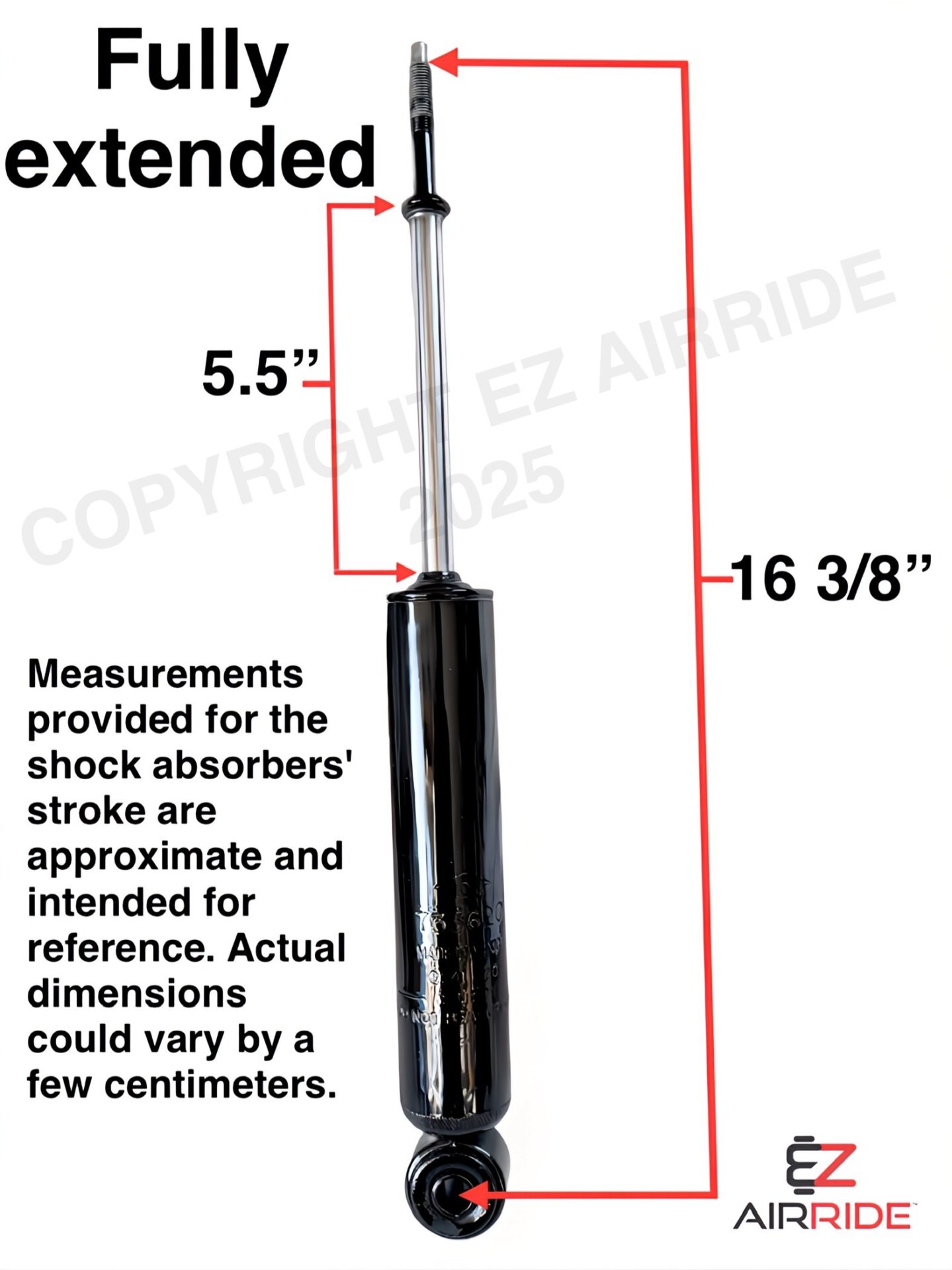
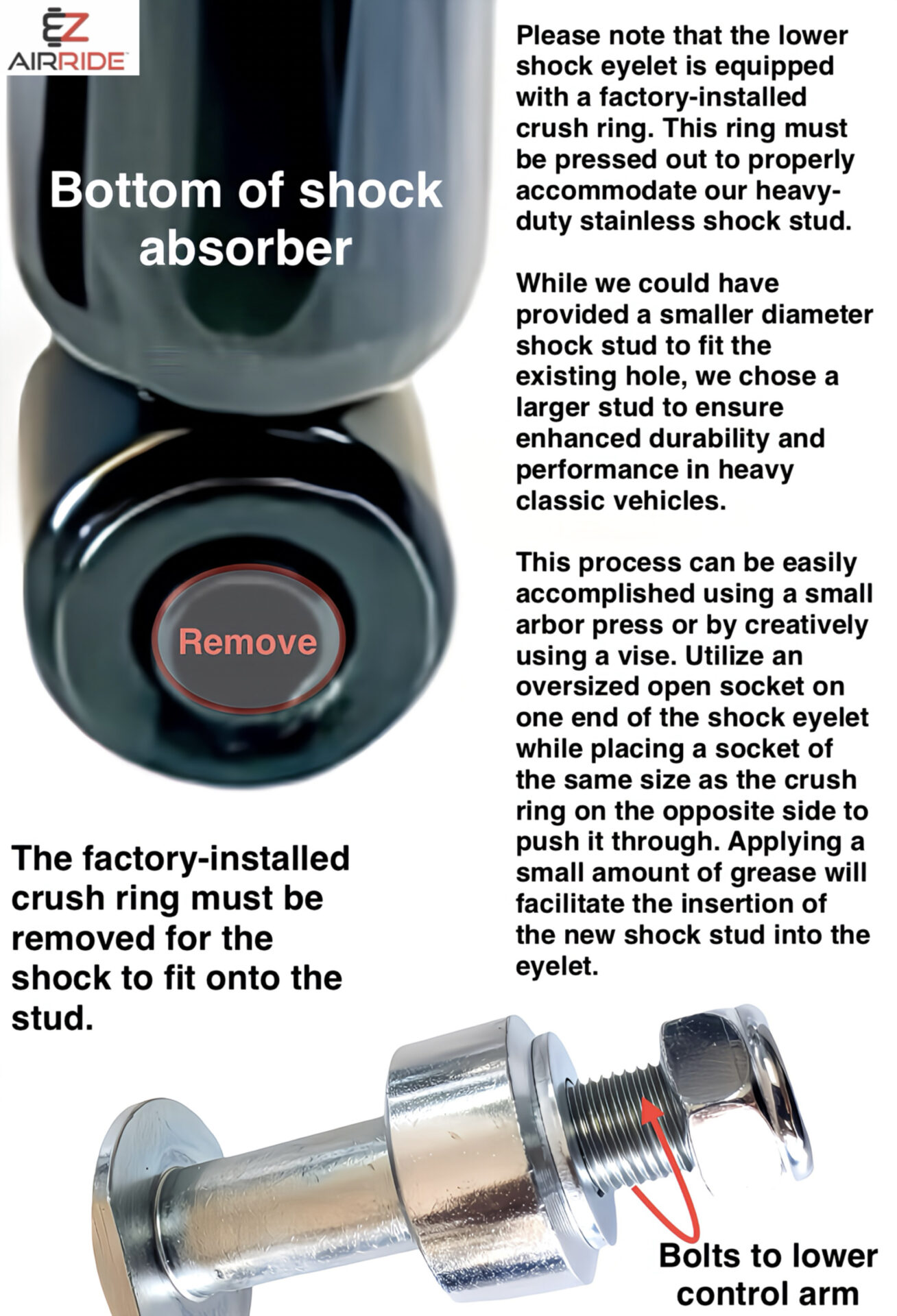
FRONT SHOCK RELOCATION KIT: The front shock relocation kit is designed to enhance your classic vehicle’s cruising performance. It includes both shock absorbers, dust covers, lower control arm stainless studs, and steel upper shock towers. This kit is compatible with most classic cars that use air springs in the front, primarily serving as a dampeners for the air springs.
The lower shock mounting studs will bolt to the lower control arm, securing the bottom of the shock. The upper shock towers will be welded to the frame, capturing the top threaded shaft of the shock absorber. Keep in mind that each classic vehicle may present unique challenges when relocating and positioning the upper shock towers and lower shock studs. Potential obstacles may include factory sway bars, aftermarket oversized sway bars, brake lines, larger aftermarket disc brakes, oversized wheels, wider offset wheels, etc. Therefore, if you’re a novice builder, consulting with a professional builder or a certified shop can provide valuable guidance and ensure a successful installation of your front shocks.
CLOSING REMARKS ON FRONT SHOCK INSTALLATION: The advice provided is relevant for the majority of our vintage vehicles during the process of relocating the front shock for air suspension installation. There may be some disparities among early classic vehicles, particularly between rear-steer and front-steer models during shock installation. Most well-known models, such as early X-frame Impala’s, Chevelle’s, Monte Carlos, Caprice Classics, and similar vehicles, are typically categorized as front-steer models. This means that the steering components are usually positioned in front of the wheels, near the core support, leaving more clearance for a shock to be mounted outside of the airbag onto the backside of the control arm facing the firewall. On the other hand, other early classics, such as 1958-1970 Cadillacs and similar models, are considered rear-steer vehicles, meaning that most of the steering components are located behind the wheels. This arrangement leaves little room for mounting a shock. As a result, many professional builders opt to mount the shock up front, facing the bumper—similar to the approach taken by Cadillac engineers when they introduced factory air suspension on several early models between late 1957 and 1960. Given the diverse designs of vehicles made over half a century ago and different manufacturing practices across the country, potential obstacles—such as brake lines, sway bars, or oversized wheels—may arise. Therefore, we want to reiterate that consulting with a professional builder or a certified shop is advisable when planning to relocate your front shocks.
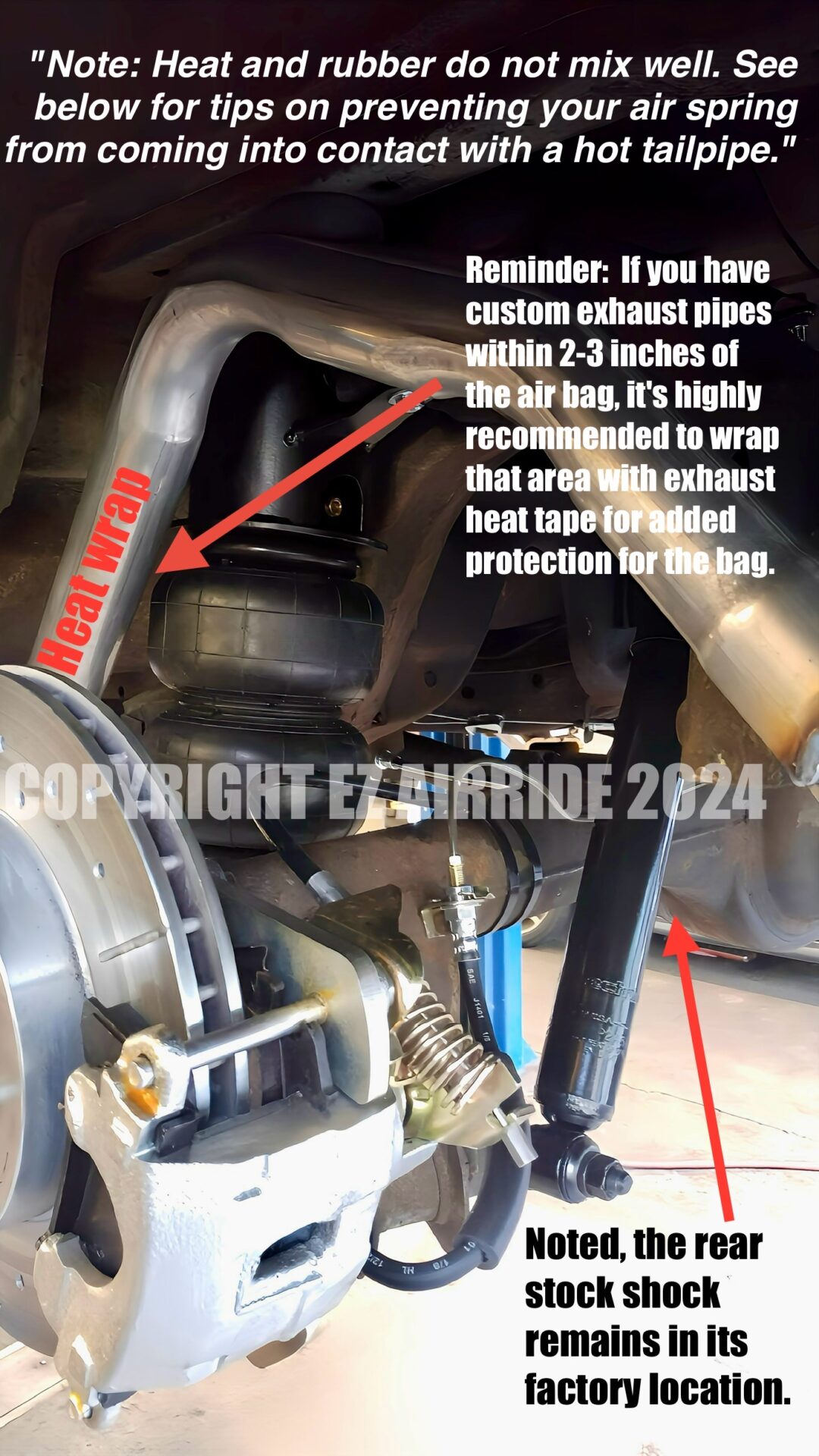
REAR SHOCKS: Let’s talk about rear shocks—done! We don’t include them for this reason: our rear bags and brackets are designed to work with your original factory gas shocks. Many companies will try to sell you high-end name-brand shocks, claiming they are essential for air ride systems. In reality, the airbag’s quality and longer stroke support the vehicle’s weight. The purpose of the shock is to act as a dampener for the airbag, helping to smooth out the ride during sudden encounters with large potholes or unexpected railroad tracks at 45 MPH. That’s why a basic stock shock will work just fine—if it’s too stiff or heavy-duty, it will interfere with the air spring’s ability to absorb impacts effectively. This means the airbag won’t perform at its best in cushioning the ride. If your rear shocks resemble relics from Montgomery Ward or were added during high school auto shop class, like those hijacker air shocks from the ’70s, it might be time for an upgrade. Visit your favorite auto parts store for an inexpensive stock gas shock that fits your vehicle. Remember, investing in higher-end heavy-duty shocks may lessen the dynamic lift and ride quality of your air ride system. The more robust the shock, the more it can take away from the ideal ride quality. So take the $200-$300 we saved you and put it back into your pocket!
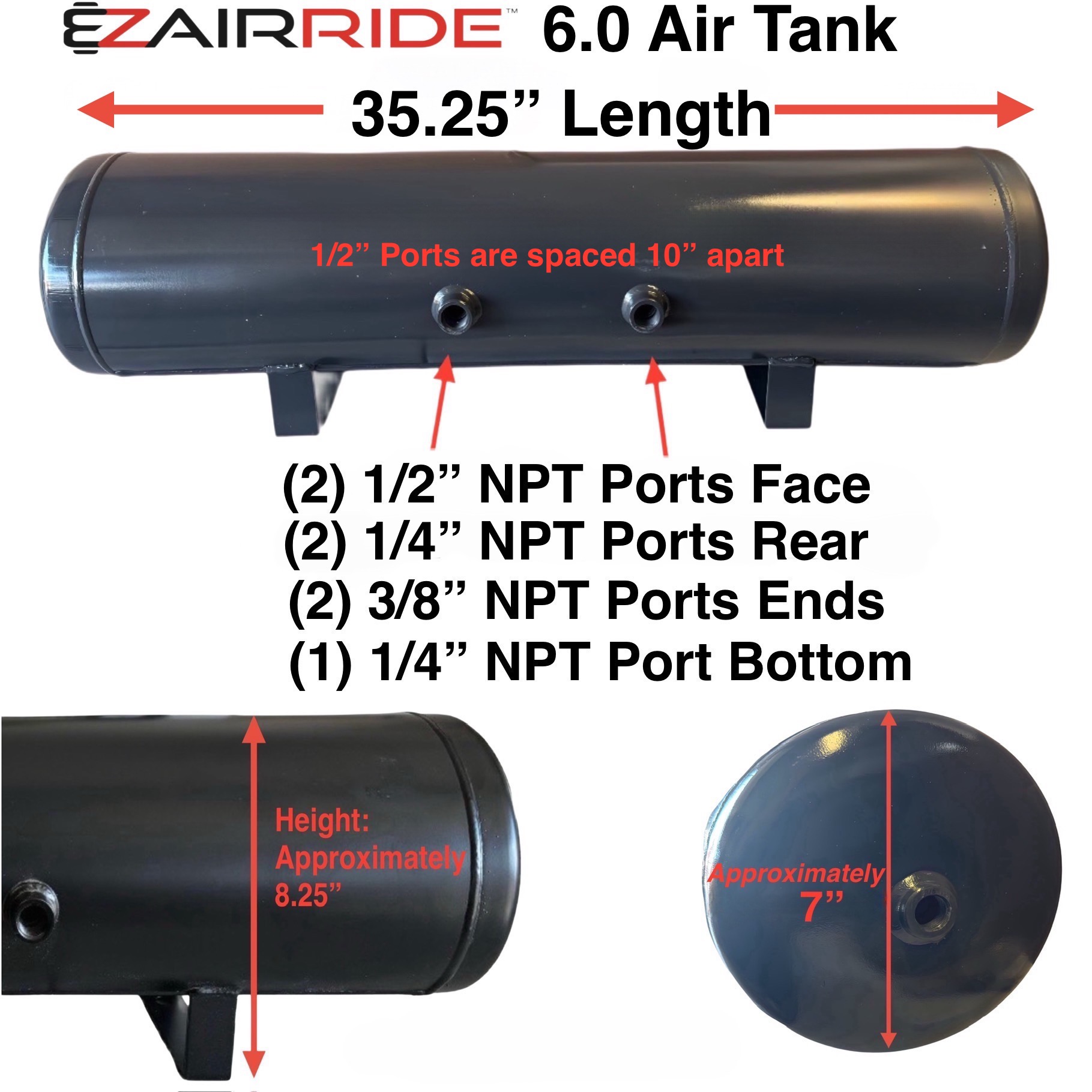
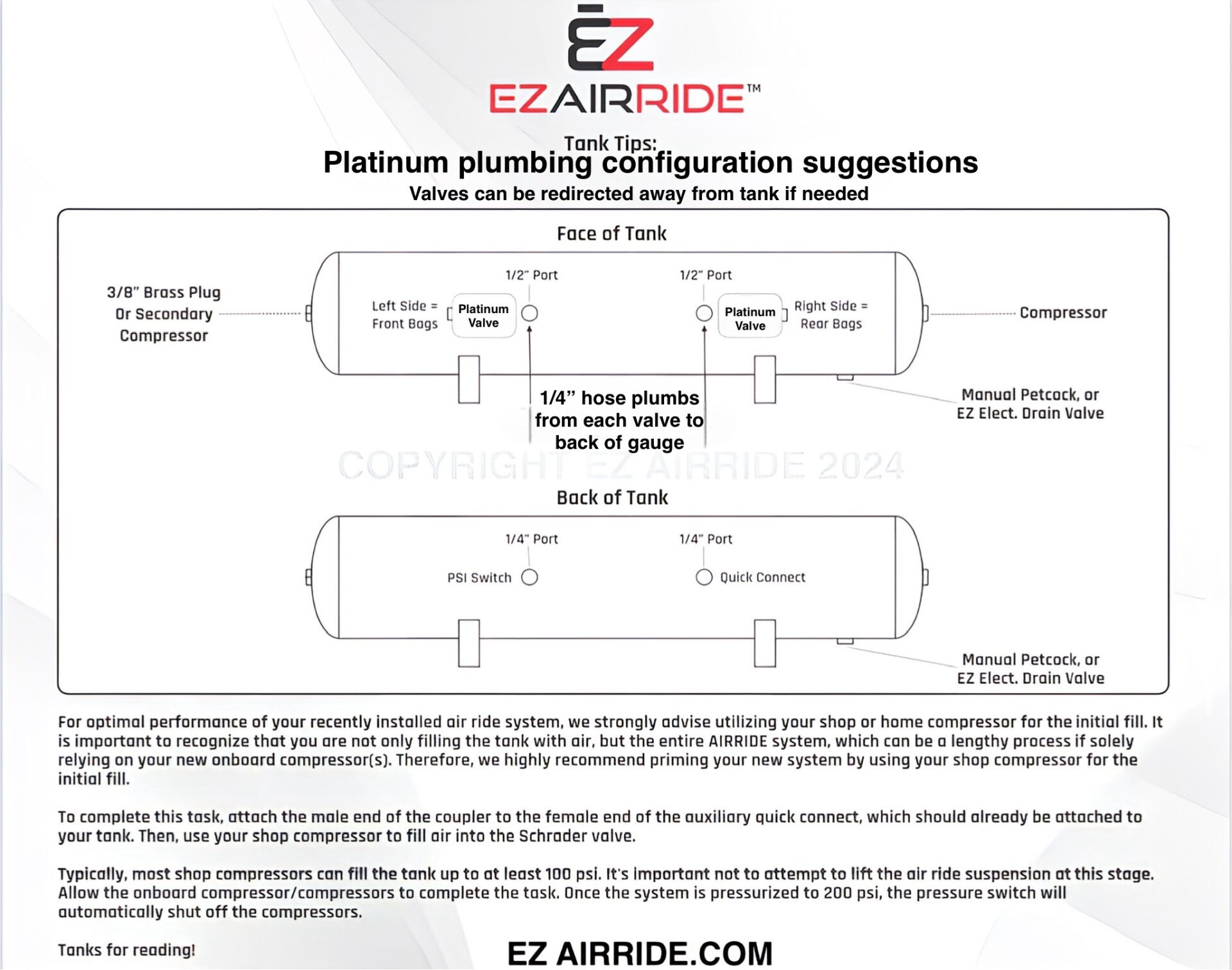
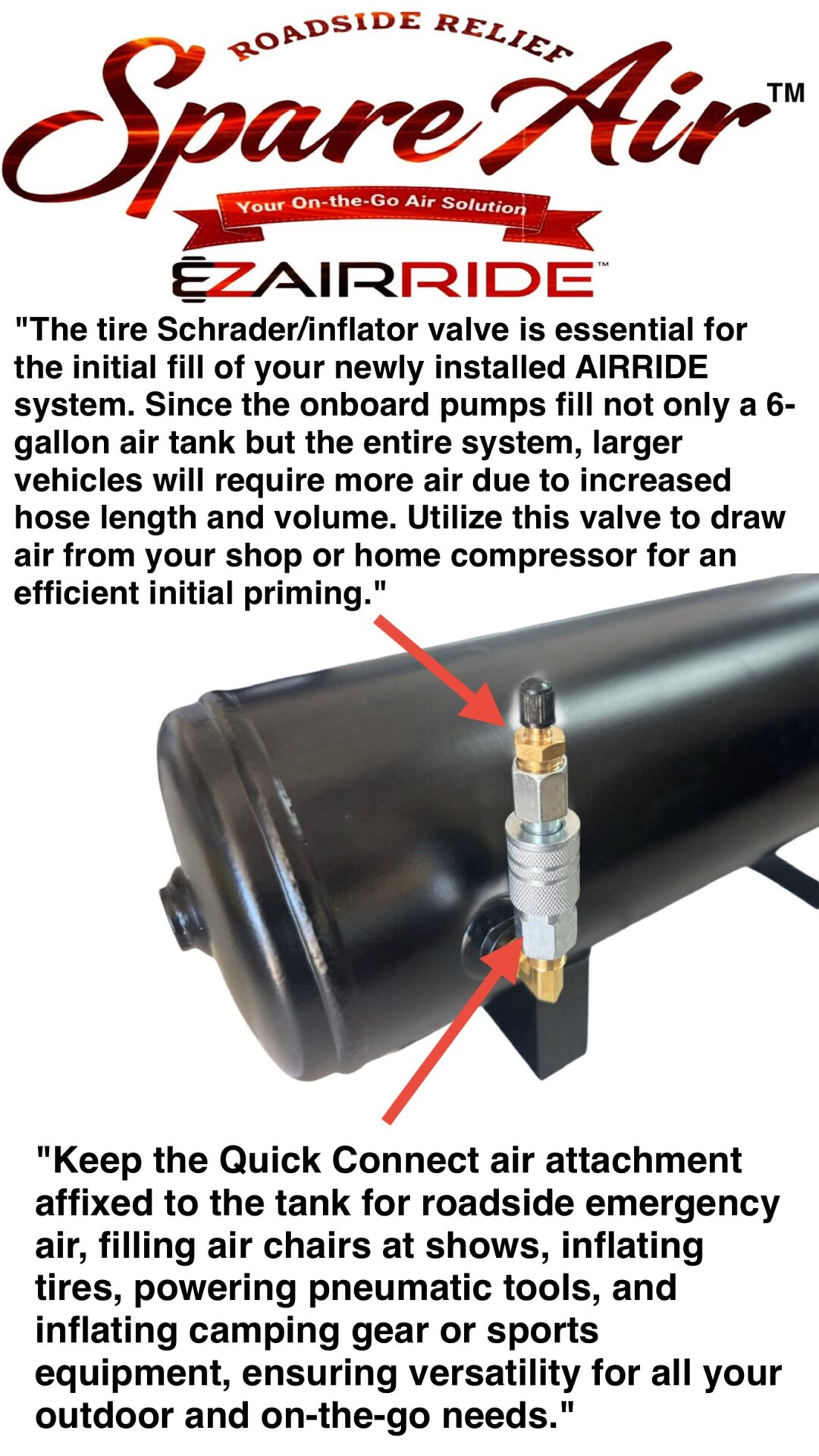
THE AIR TANK : Our exclusive tanks have a capacity of just over 6 gallons. They measure approximately 35″– in length, 7.25″- in diameter, and stand about 8.50″- tall. The front features two 1/2″ bungs for connecting to the manifolds, while each end of the tank has 3/8″ bungs for adapting to one or more compressors. Additionally, there are two 1/4″ bungs on the rear of the tank for the PSI switch and a quick connect for roadside air/train horn. Lastly, a 1/4″ bung on the bottom of the tank for easy drainage.
SPECIAL NOTE FOR STATION WAGON OWNERS: The air tank measures approximately 35 inches in length and has a capacity of just over 6 gallons. It stands about 8.50 inches tall. Most full-size wagon builders installing air ride systems place this tank either in the third-row seat footwell or in the rear, towards the back door. If this is your preference, this tank should suffice, as many 1965 through 1970 wagons have compartments in the back where the tank can fit alongside the pump. However, we recommend checking our thumbnail pictures for the exact dimensions to ensure it fits your specific compartment, as wagons manufactured in different factories throughout the country may vary in size. Keep in mind that you may already have a spare tire or other components inside, potentially limiting space for the air tank. If space is a concern, we also offer our mini split 3-gallon air tanks, which measure just under 20 inches in length and can fit snugly within the frame. Some builders have even mounted them outside the frame behind the wheel. Again, please refer to our thumbnail pictures for exact dimensions. If you’re interested in our smaller 3-gallon tanks and want to discuss upgrade options, feel free to give us a quick call or email.
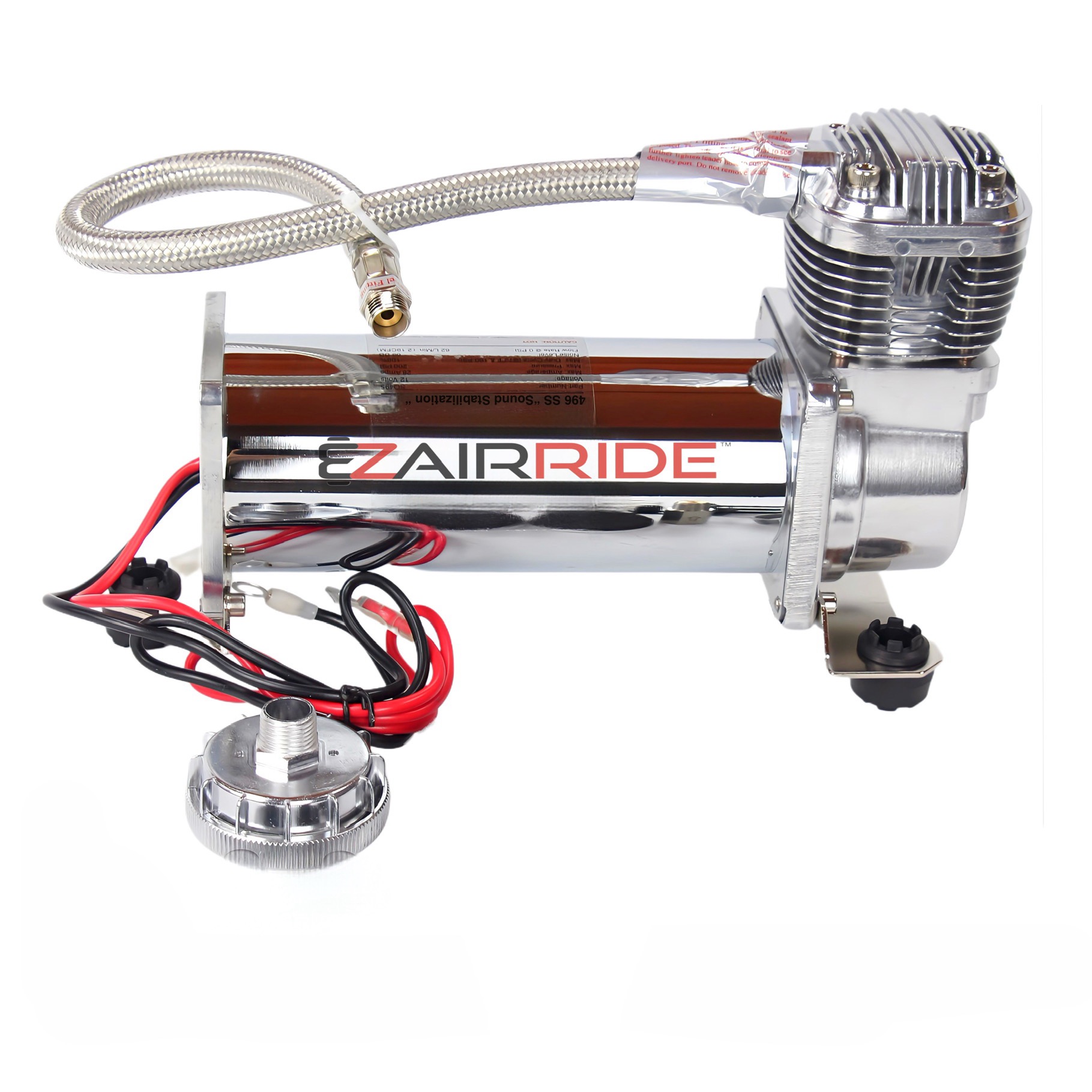
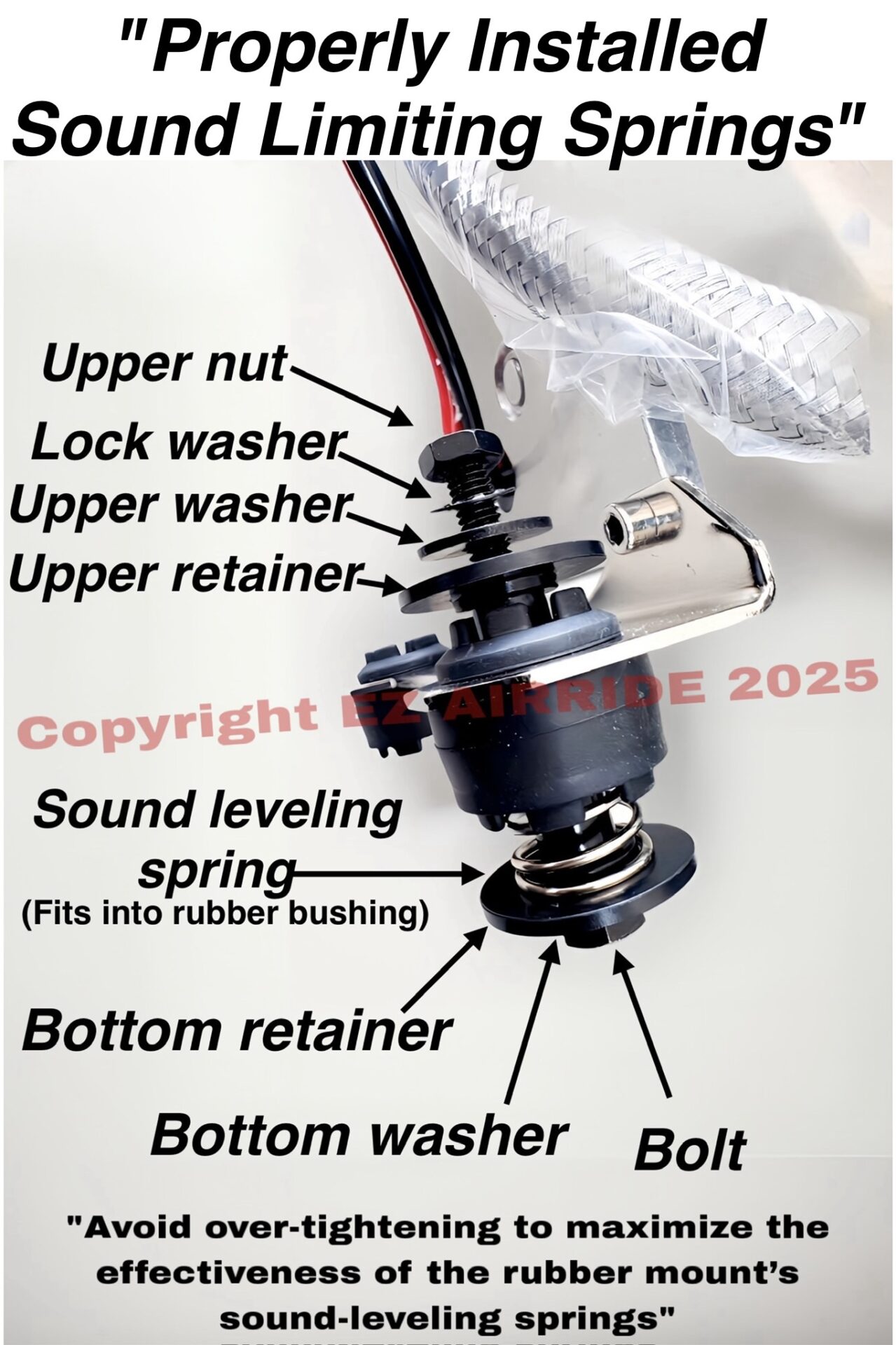
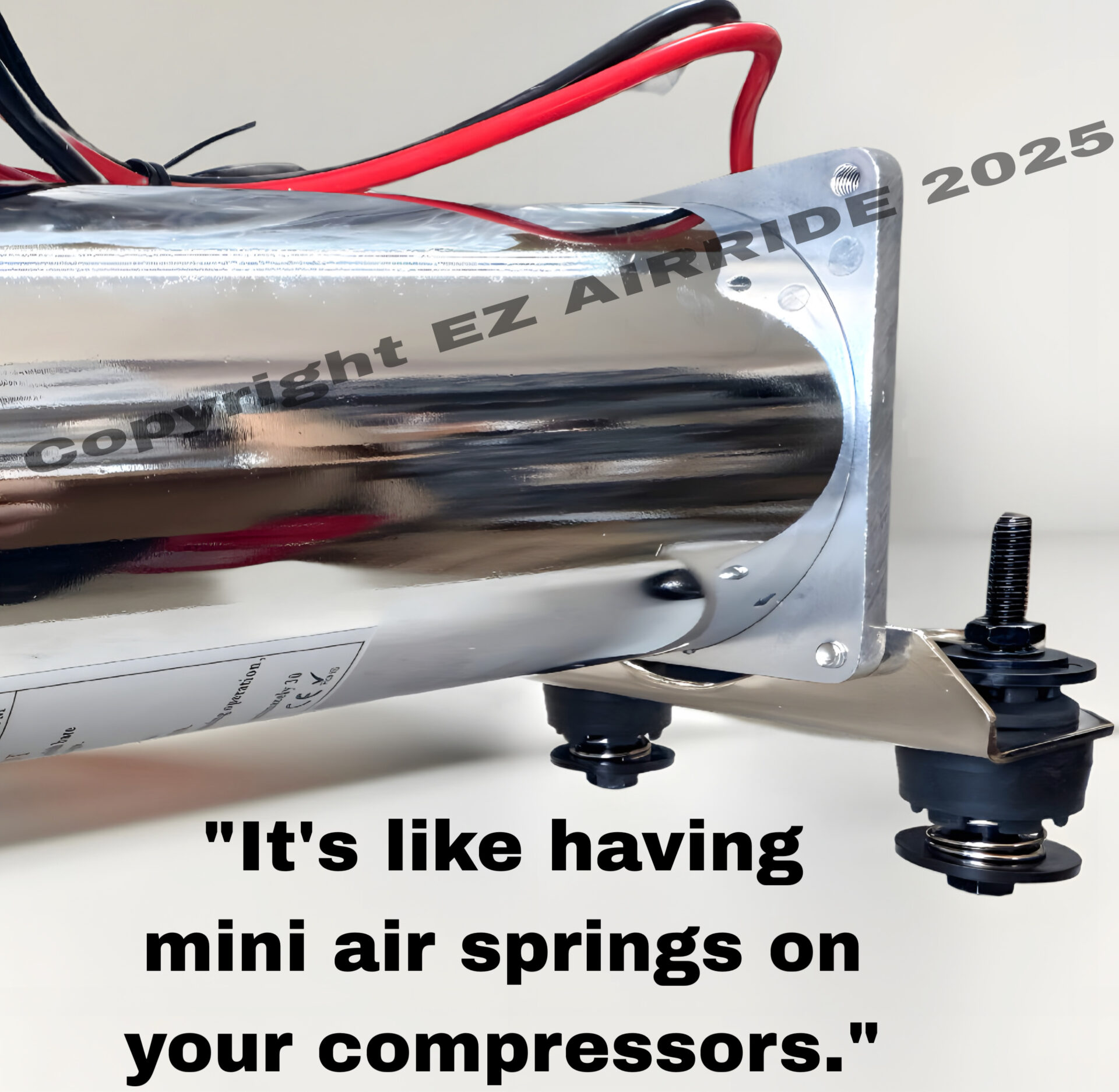
THE AIR COMPRESSOR: Introducing our premium 496 SS compressor, featuring a maximum working pressure of 200 psi. This compressor is a 100% duty cycle pump, delivering 2.19 CFM. This work horse is the ideal choice for any onboard air ride system. Each 496 SS pump includes a special set of “Sound Stabilizer” springs to reduce noise and vibrations, ensuring a much more quiet operation. Each compressor is accompanied by a sleek 3/8″ NPT stainless steel braided leader hose featuring a built-in check valve for effortless connection to the air tank.
OUR 496 SS COMPRESSOR IS OIL-LESS: And features a built-in thermal overload protector incorporated to safeguard the compressor from overheating even in the most challenging operating conditions. With it being oil-less you can mount it in any direction or position. The only position we do not recommend is an upside-down mount, since heat tends to travel upward, and does not dissipate well in the motor housing.
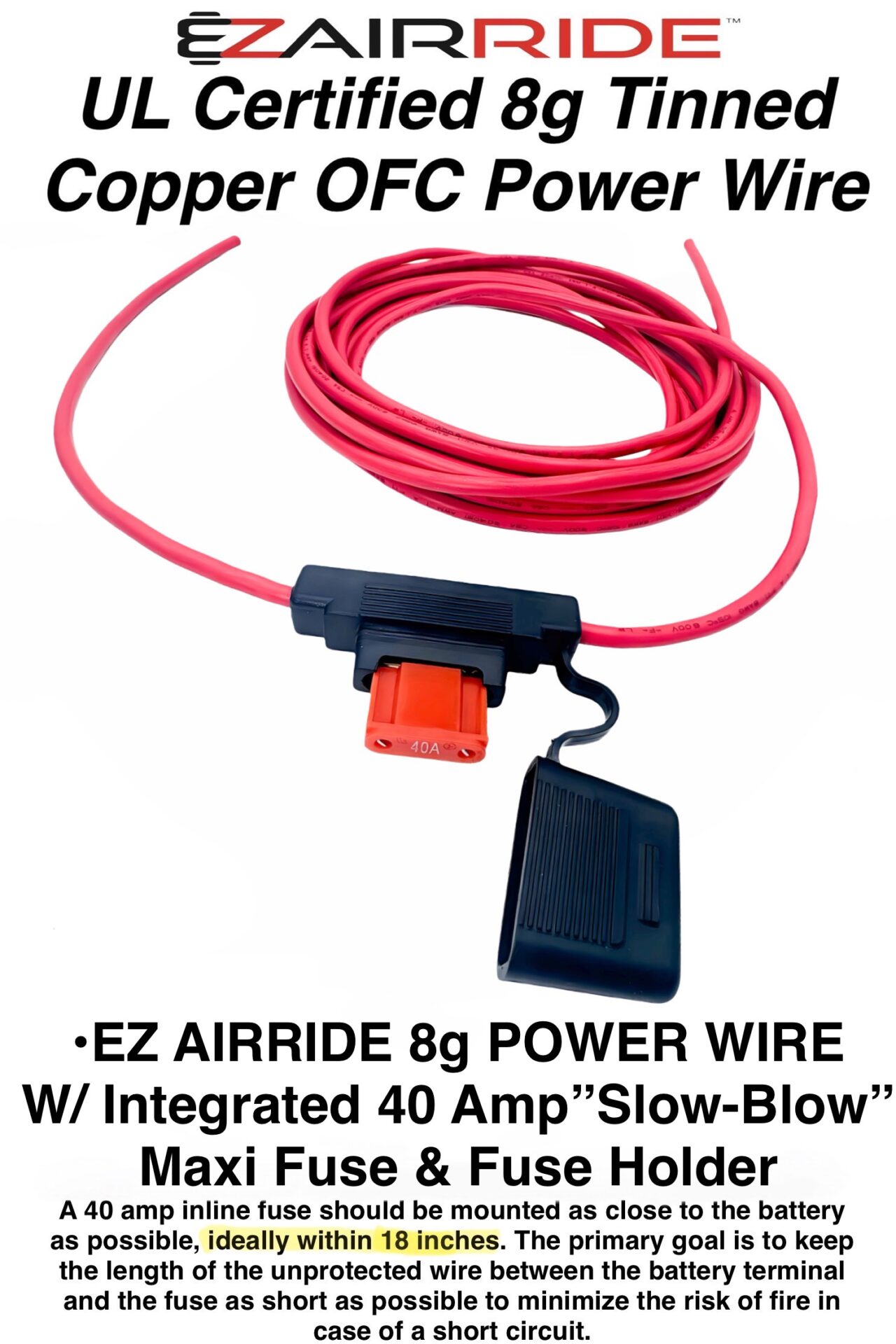
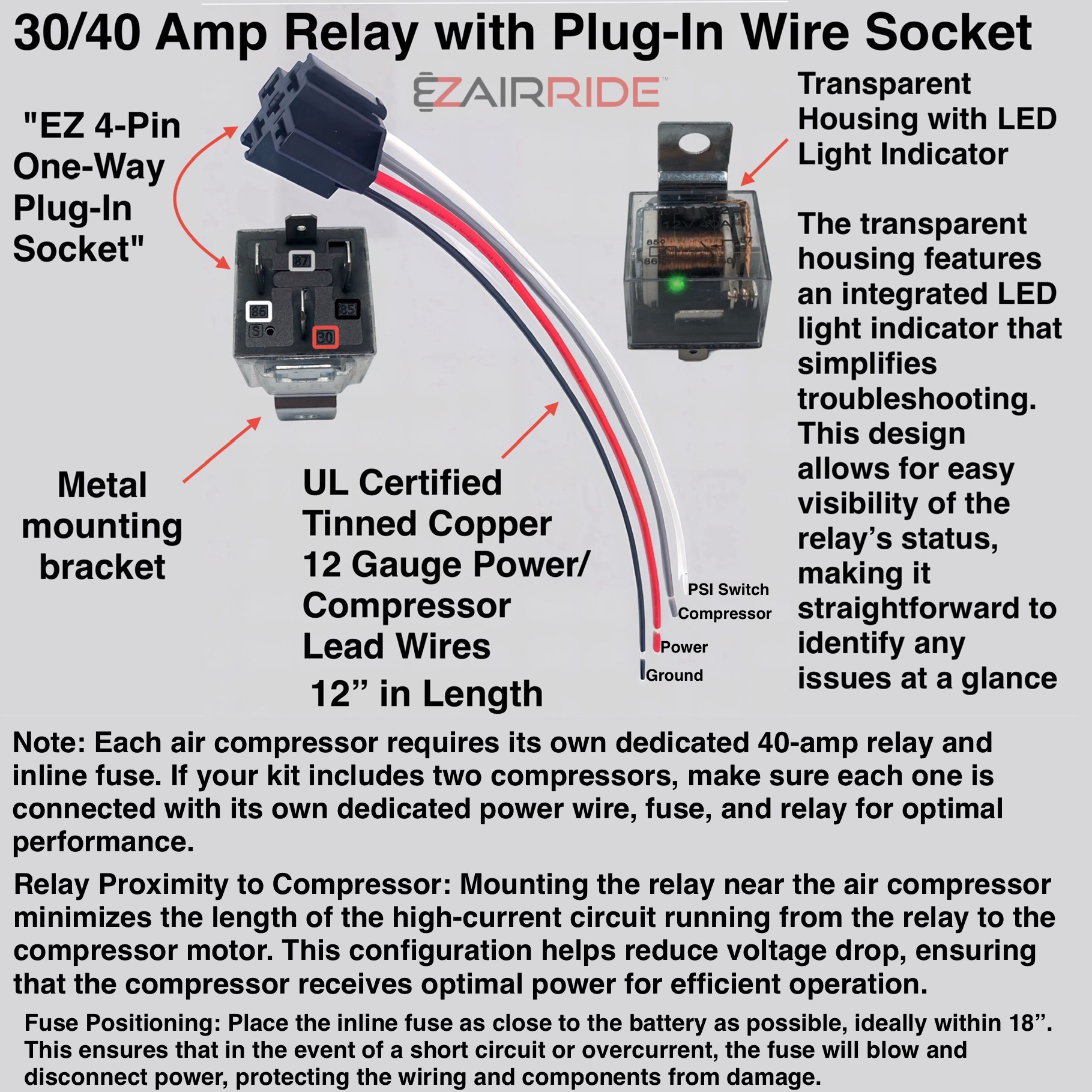
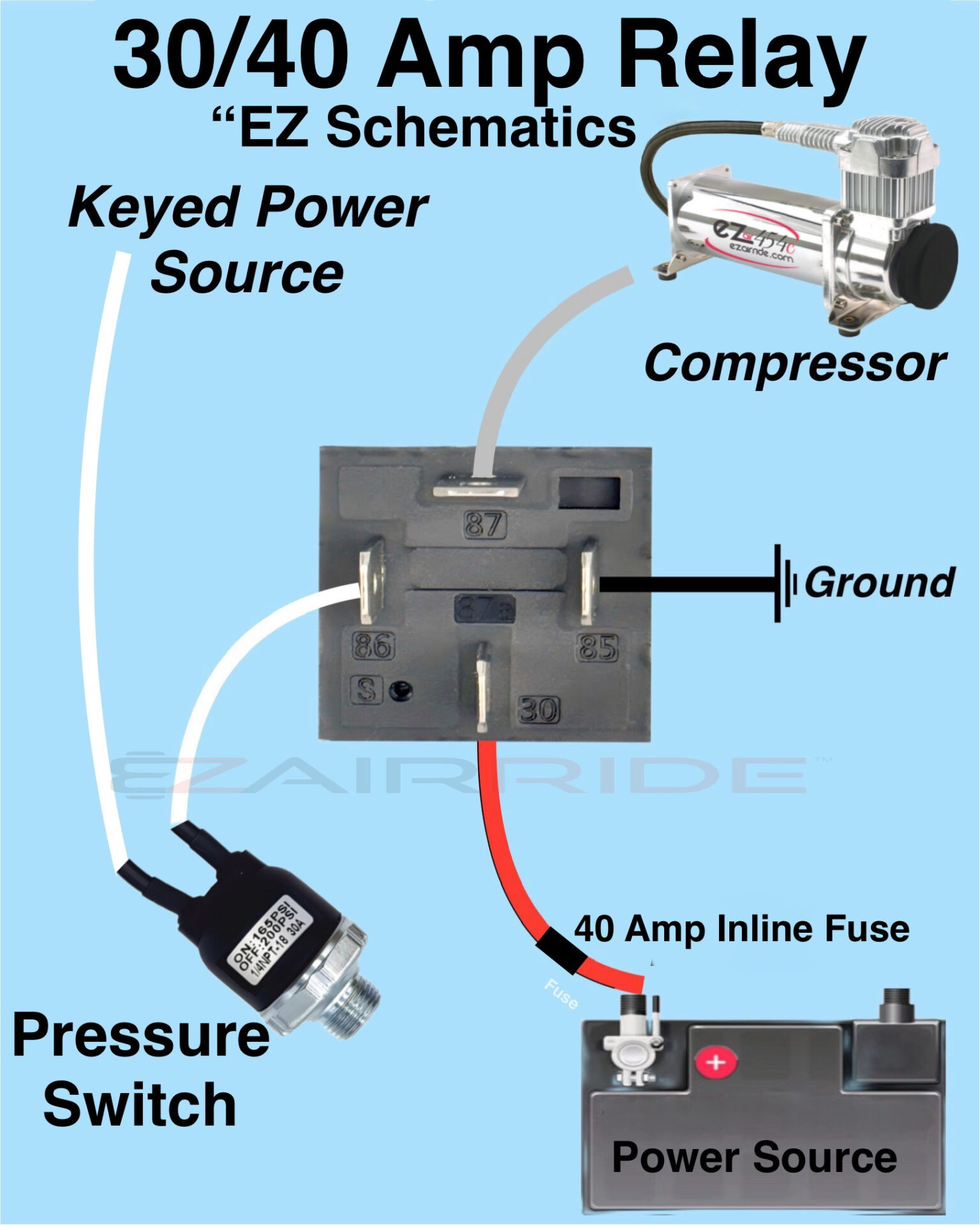
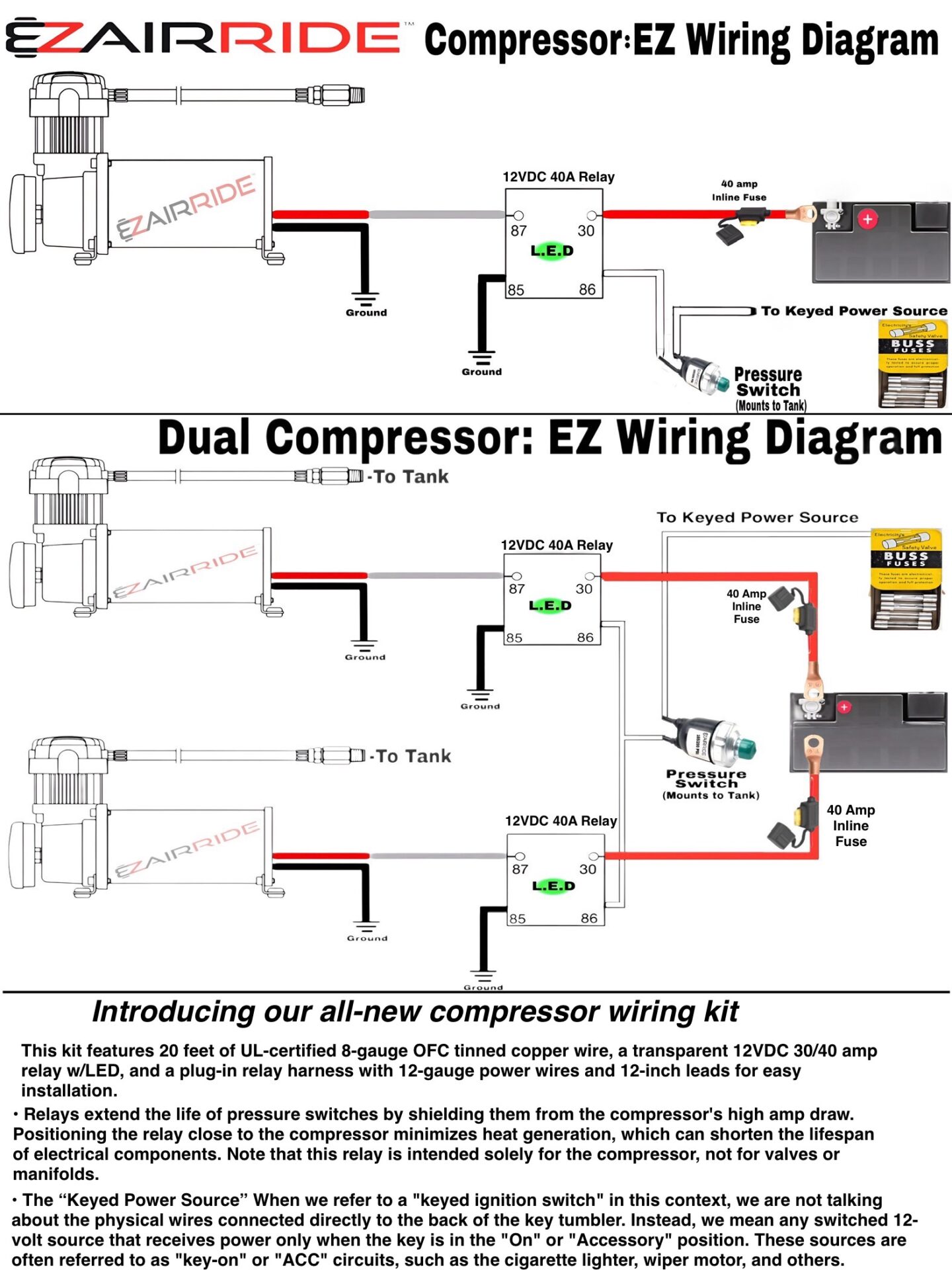
INCLUDED WITH THE COMPRESSOR: An EZ AIRRIDE™ comprehensive wire care package, designed to provide everything you need for a successful installation and to ensure your compressor operates smoothly for years to come. This package includes a premium 20′ roll of our exclusive EZ AIRRIDE UL Certified 8-gauge OFC Tinned Copper wire, allowing you to connect the compressor in your trunk to the battery located up front. Also included is an integrated 40-amp inline Maxi-Fuse with a protective fuse holder, a 30/40-amp transparent relay w/LED accompanied by a color-coded plug-in relay harness for easy setup, and 8 gauge copper lugs. With these high-quality components, you can trust that your air ride compressor will deliver reliable and efficient performance for years ahead.
KEY FEATURES OF THE COMPRESSOR:
- Chrome body
- Built-in thermal overload protector
- Maximum pressure: 200 psi
- Duty cycle: 100% @ 100 psi, 2.19 CFM
- CFM: 2.19
- Maximum amp draw: 26 per compressor
- Fill rate (5 gallons): 0-200 psi 9 min. 45 sec. (± 15 sec.) ; Refill time: 165-200 psi = 2 minute 15 seconds
- Sound Stabilization built inside /Sound-Stabilizer Spring kit on the outside
- 3/8″ leader hose with built-in check valve
- 12v Magnetic Motor
- Metal Filter Housing
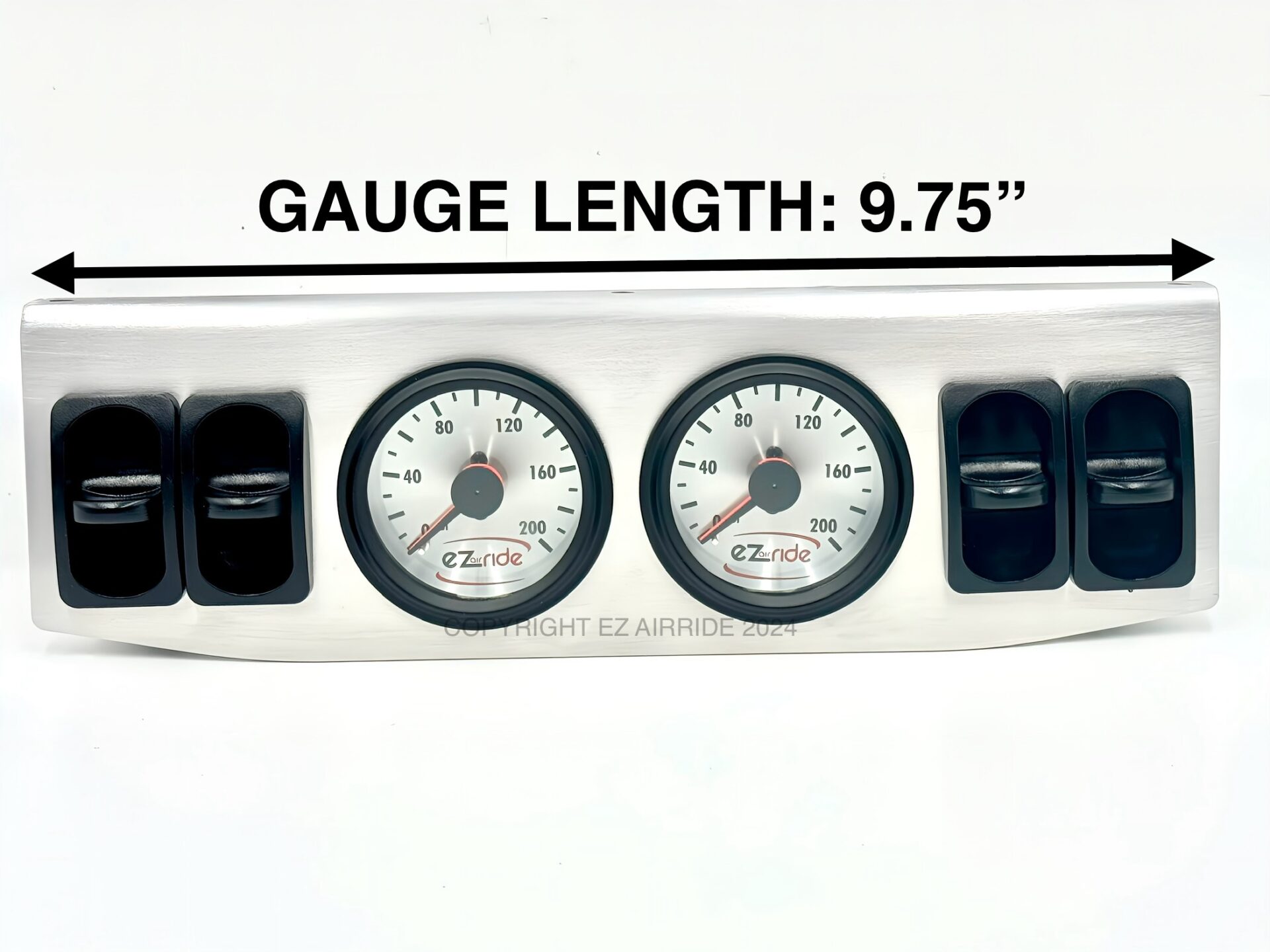
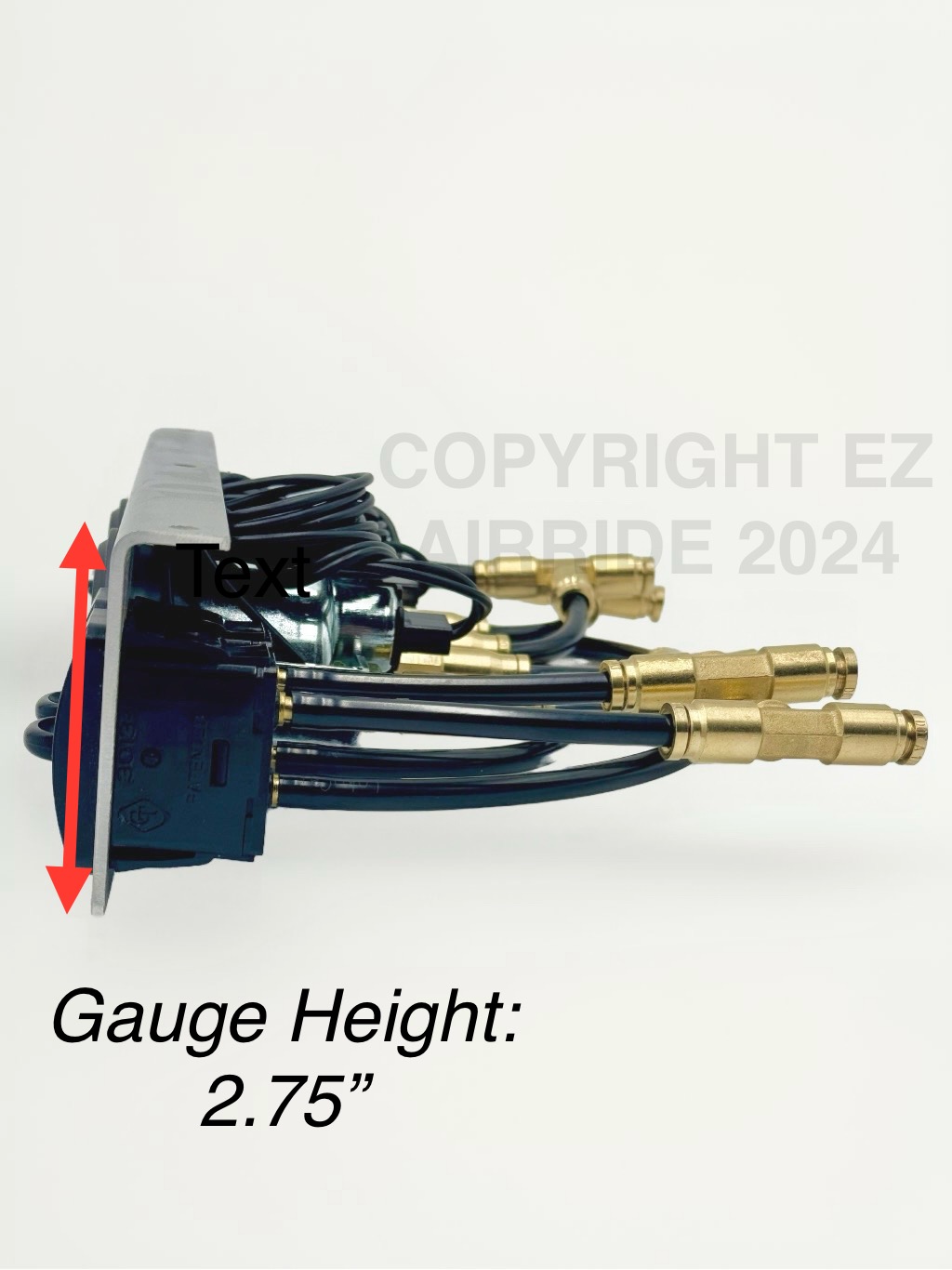
The Classic Plus Gauge Panel™ serves as the primary control center for your air ride system. The Classic Plus gauge will offer ease over excess. This is where you adjust the pressure in each bag, equipped with four paddle valve switches and two glass gauges containing dual needles to cover both front & rear air bags. The panel is designed for smooth and simple control – there’s no need for fancy finger maneuvers to control the paddle valves, so you don’t need to be a finger acrobat. Each paddle valve is strategically paired at both ends of the sleek gauge panel for ease of adjustment. You can effortlessly use your finger or thumb to raise the front or back of the vehicle uniformly. The panel’s four-corner control allows for fine-tuning each corner, or just the front, back, or side to side. This comprehensive control over your suspension lets you modify it to your exact liking with a mere touch of a finger.
- Gauge Panel Features:
- Aluminum Panel with 4 paddle valves
- Dual needle glass air pressure gauge: 0-200 psi
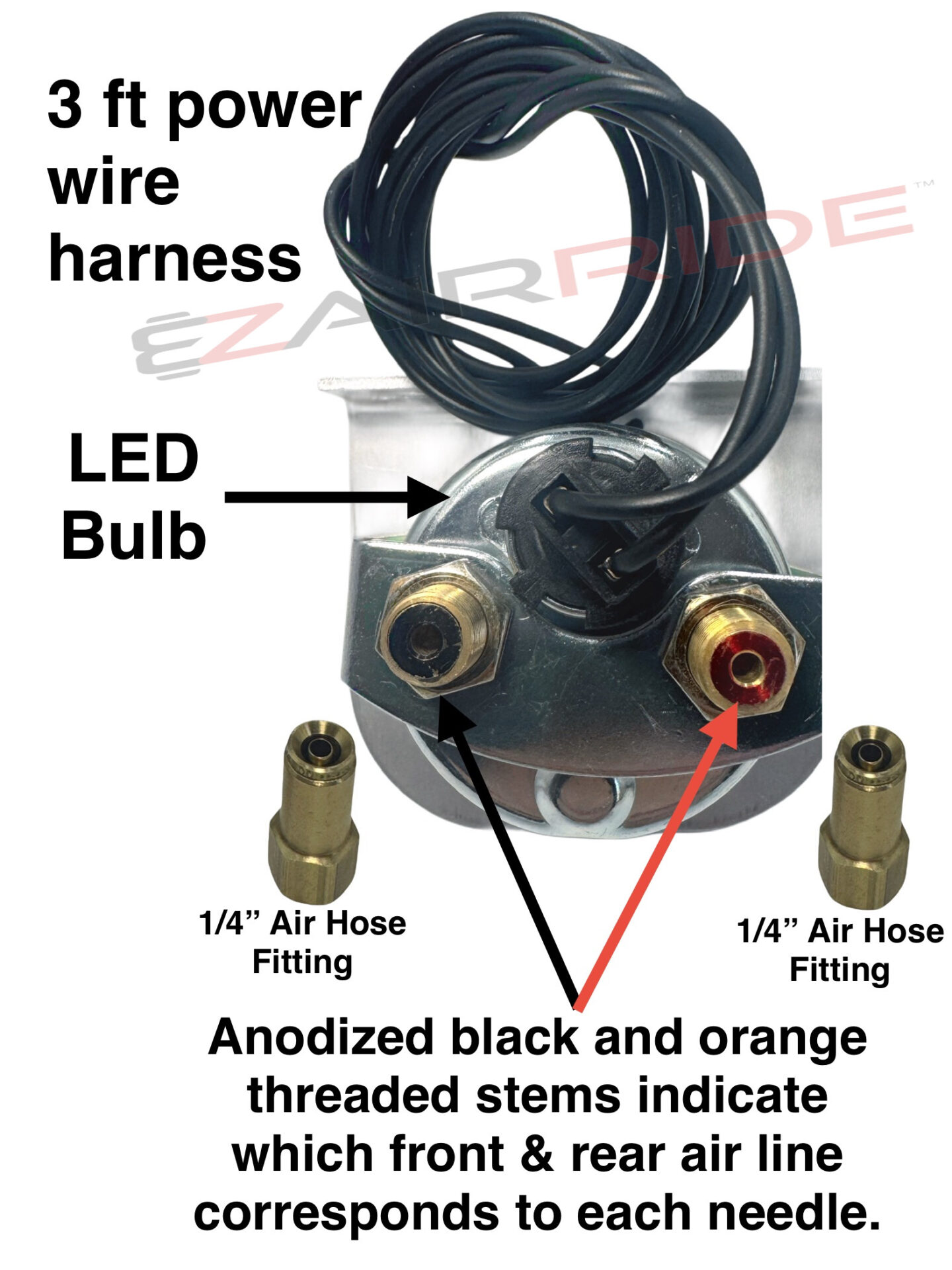
- Brushed aluminum dial with bright white L.E.D. bulbs & power harness
- An all metal gauge casing with black & orange needles
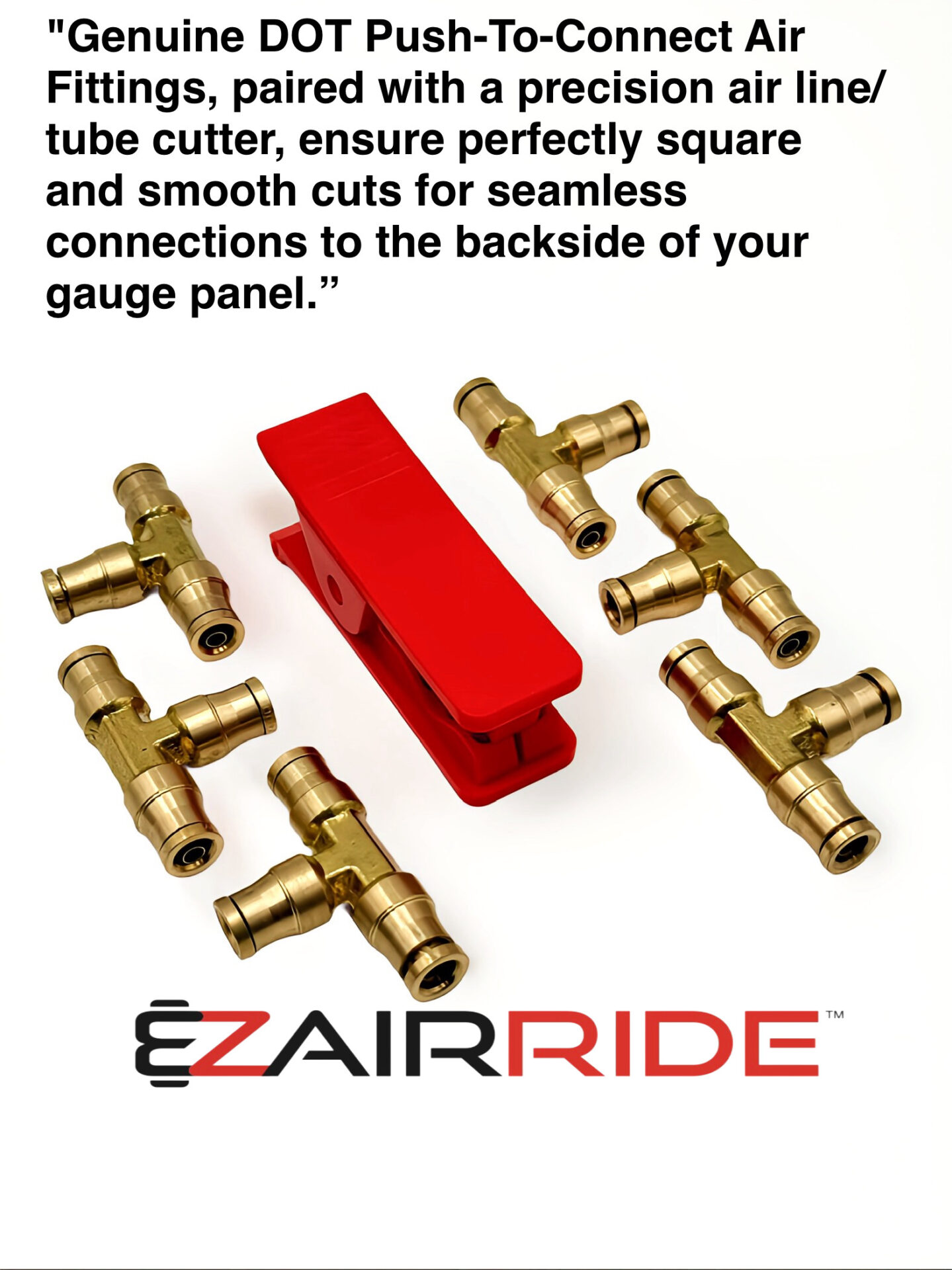
The Air Fittings: Our genuine and easy-to-use air ride brass fittings are certified by the Department of Transportation, ensuring their durability and strength. Compared to plastic and metal fittings, our brass DOT fittings are more durable and stronger, capable of withstanding higher pressure levels without cracking or stressing. Their high resistance to corrosion makes them perfect for long-term use in air ride suspension systems exposed to moisture and other elements. These certified brass fittings are designed and tested to meet specific performance standards, guaranteeing reliability and consistency in their operation. With a reduced likelihood of failure or leaks, they provide a secure connection for your air ride suspension system.
Brass Fittings Included with the Classic Plus Kit:
- (4) 1/4″ x 3/8″ NPT Air bag fittings: (2) swivel 90’s for the front (2) swivel 90’s for the rear
- (2) 1/4″ x 1/2″ NPT Gauge fittings: Mounts to air tank for air supply to gauge
- (1) 1/4″ Spare Air Quick Connect w/adapter: Mounts to air tank
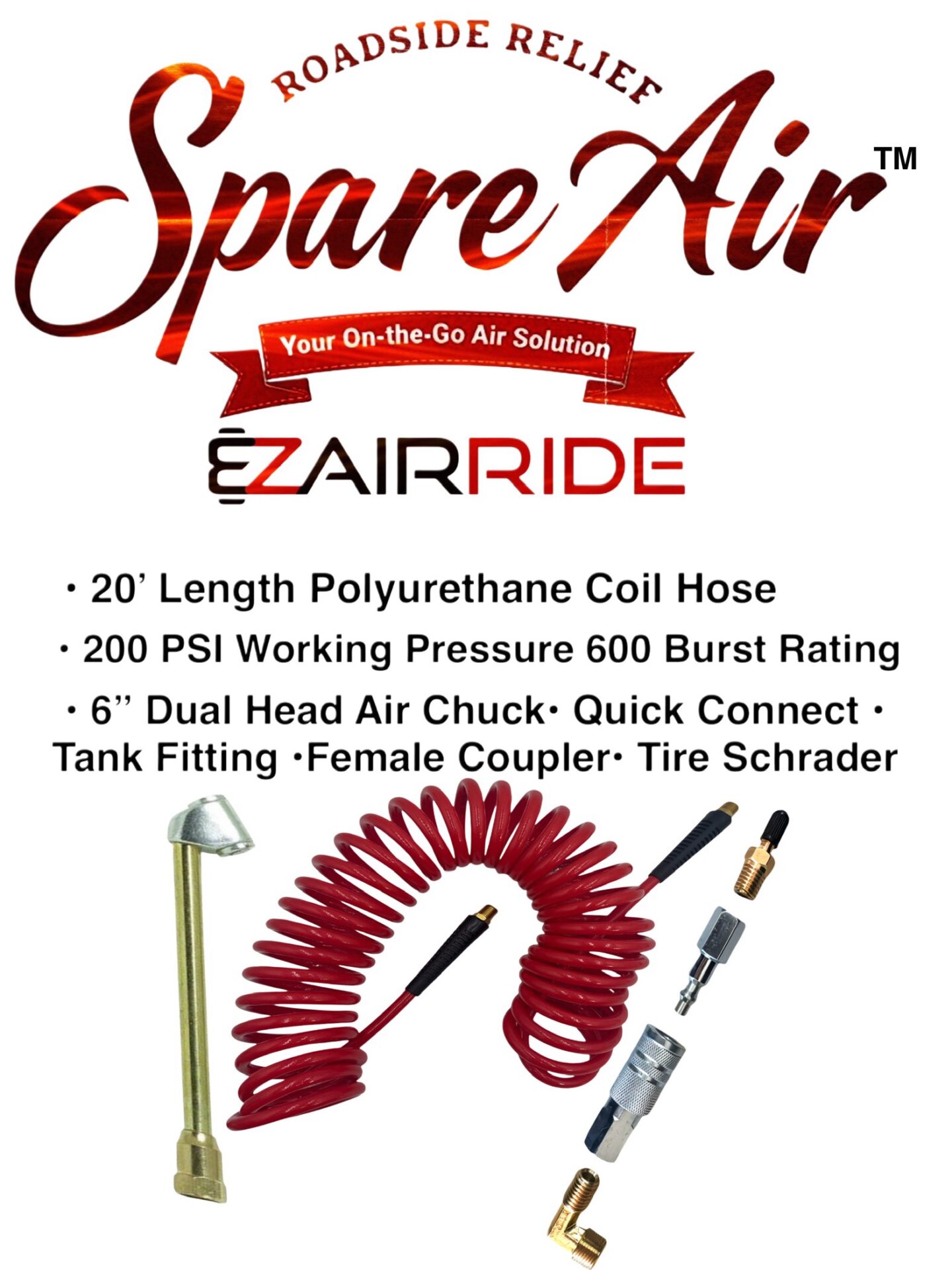
- (1) 1/4″ female Air Coupler w/ Tire Schrader Valve: For Roadside Air
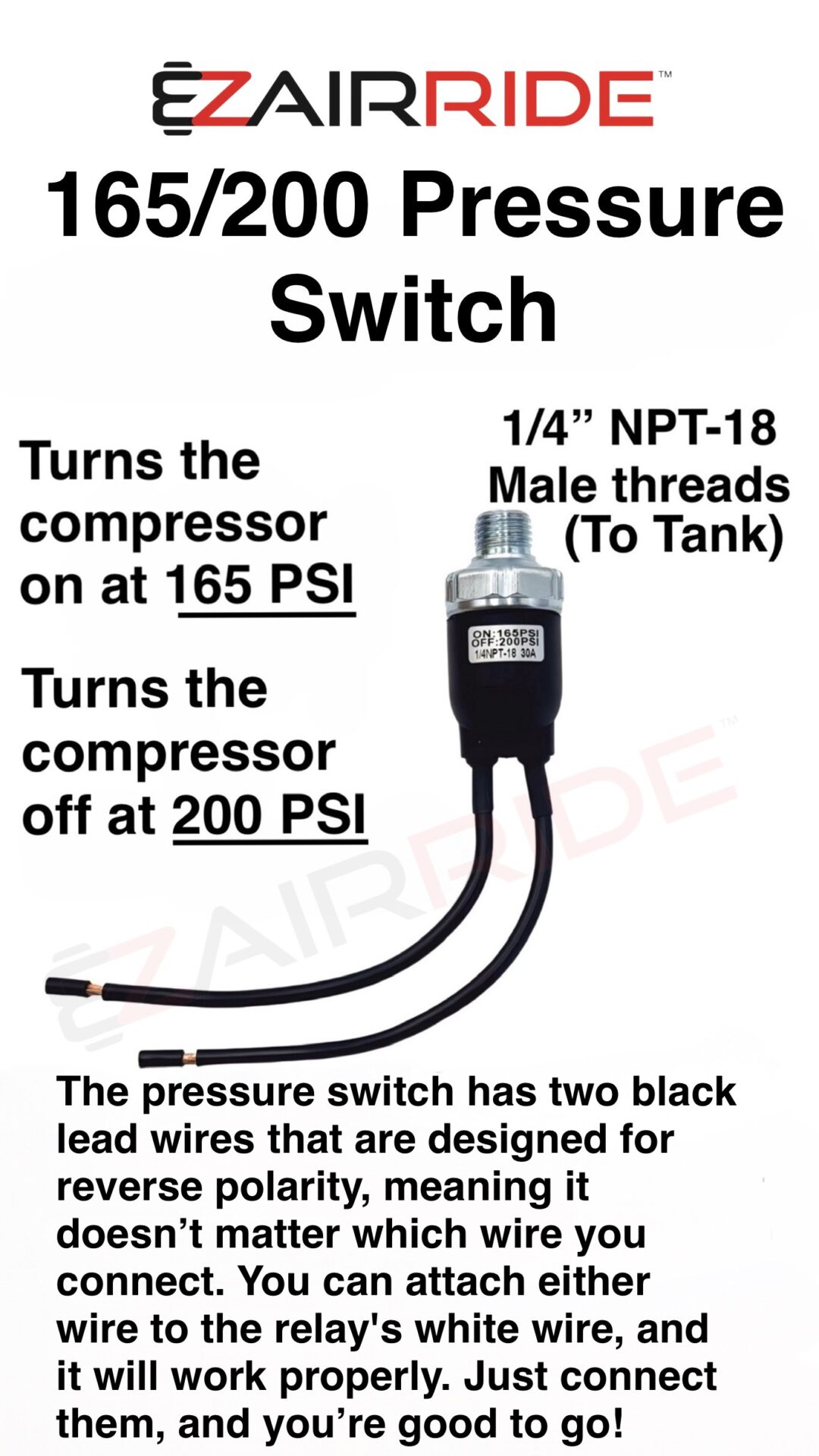
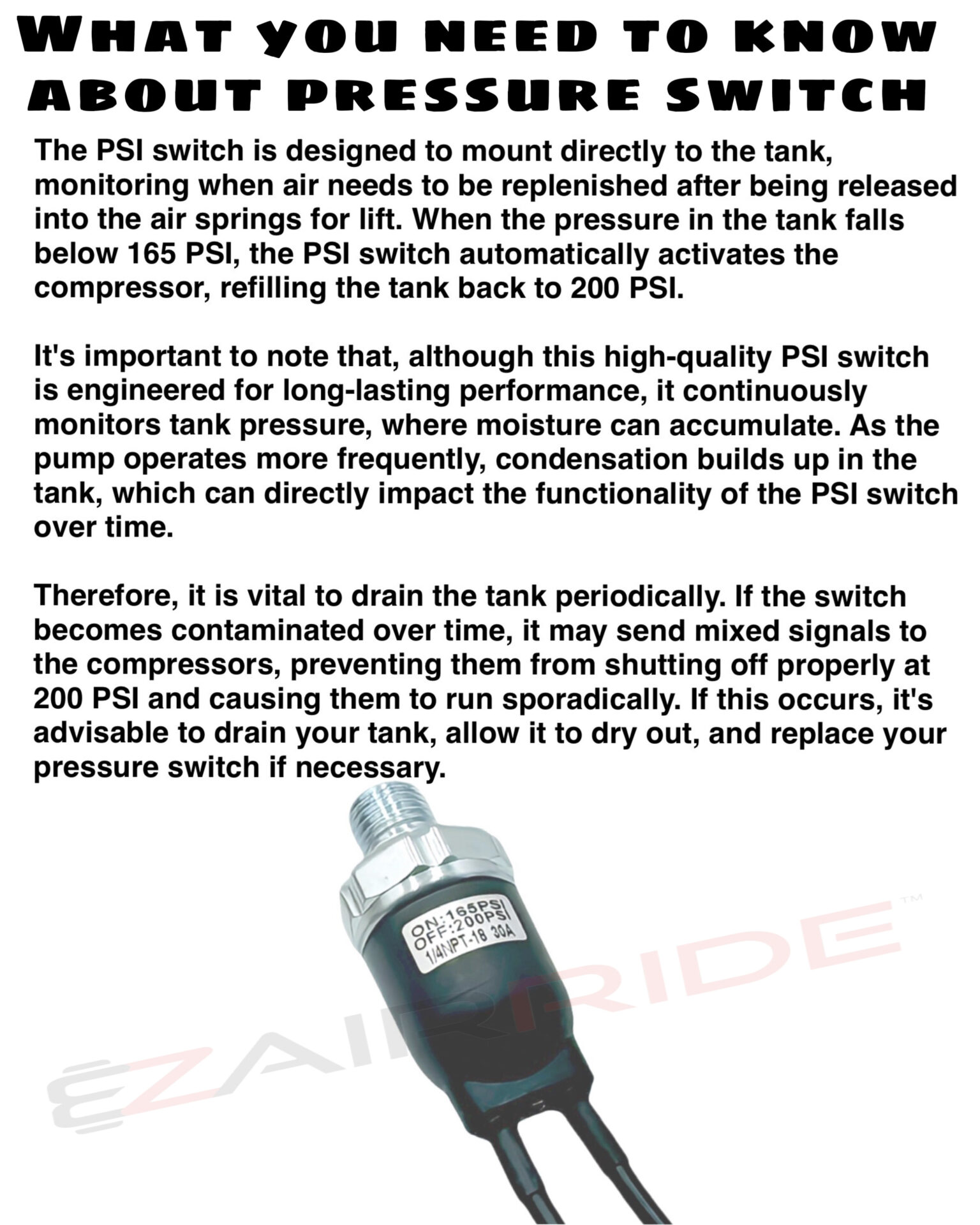
- (1) 165 on / 200 off 1/4″ Sealed Pressure Switch w/lead wires: Mounts to tank
- (1) 1/4″ Butterfly Petcock: Mounts to underside of air tank
- All Brass 1/4″ PTC Classic Plus Gauge Panel Fittings: (6) Brass Tees (Push-to-Connects) & (4) Straights